

Essentially, yes, but it depends on how we define "better." If better means more comfortable, more confident, able to have fun in a wider range of conditions — then time in the water will take you a long way. Surfing makes you better at surfing. The repetition, the wave reading, the instincts that only come from hours in the ocean — no training program replaces that. But if better means pushing the ceiling of what your body is actually capable of on a wave, that's a different conversation entirely.
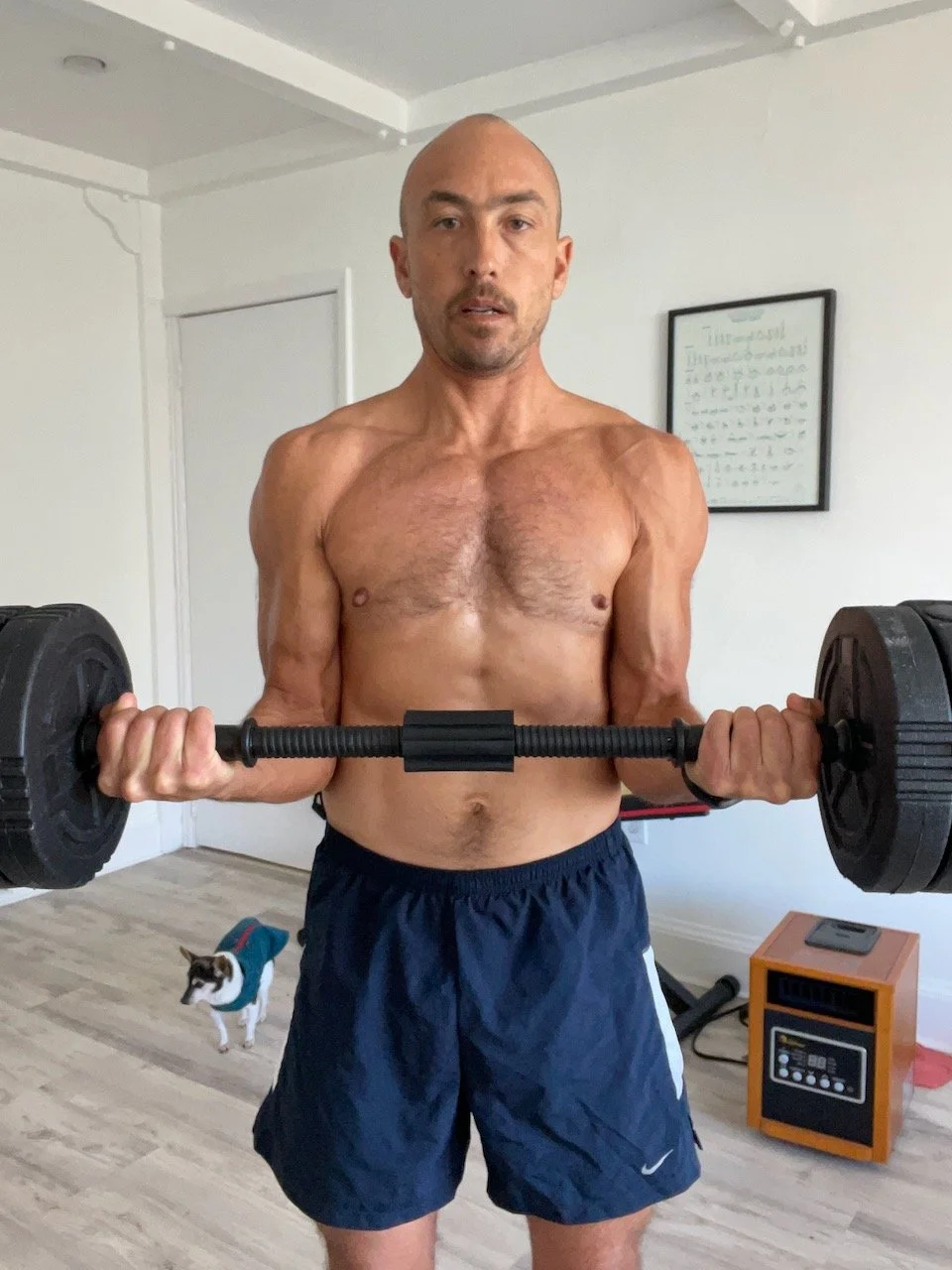
I do classical weight training. I also practice Ashtanga yoga six days a week. I track my diet with precision and I've eaten whole food plant-based for years. The result is the body in that photo — lean, defined, functional, built for a moving ocean. Not a bodybuilder's body. A surfer's body. And there's a significant difference. Bodybuilding bodies are built for artificial lights and spray tans. They're optimized for a static pose under controlled conditions — the antithesis of what the ocean demands. A fully fit surfer's body, on the other hand, is as close to perfect as a human body can get. It has to be strong and fluid, powerful and mobile, capable of explosive movement and total relaxation within the same breath. That's not a body you build by chasing hypertrophy. Bulk costs you range of motion. Tension costs you fluidity. Mass accumulation is fighting you every time you try to move with the ocean rather than against it.

What you want is strength without interference. Definition without rigidity. Power that serves your movement rather than limiting it. I call it soft strength, and it's the product of combining classical resistance training with a serious yoga practice and a diet that actually supports the machine you're trying to build. You can read more about exactly how I eat to support this in What I Eat In A Day As A Plant-Based Surfer.
The Ashtanga is non-negotiable for me. It builds the breath regulation, the hip mobility, the presence of mind, and the full body coordination that transfers directly to the water. The weight training maintains the strength and structural integrity that keeps me surfing hard into my 40s and beyond. Neither one alone produces the result. And the diet is what keeps the body composition honest — lean enough that the yoga stays fluid, strong enough that the training has something to work with. I go deeper on the training side in How I Train For Surf Trips.
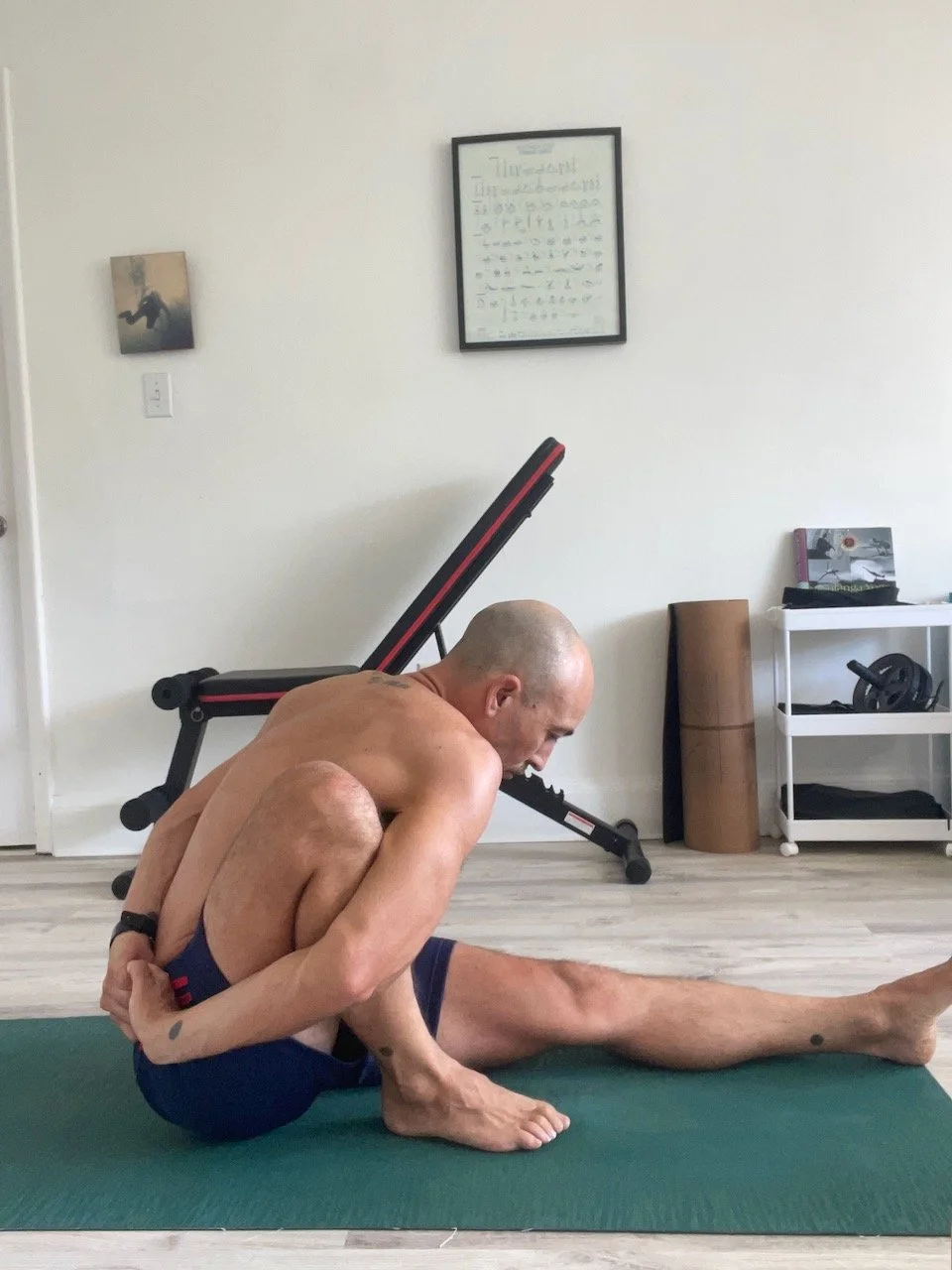
So do you need to train to surf? If you want to be comfortable and have fun, probably not — time in the water will take you a long way. But if you want to know what your body is actually capable of on a wave, then yes. You need to train smart, eat with intention, and build a practice that serves the ocean rather than the gym. That's the ceiling. And it's higher than most people think.