

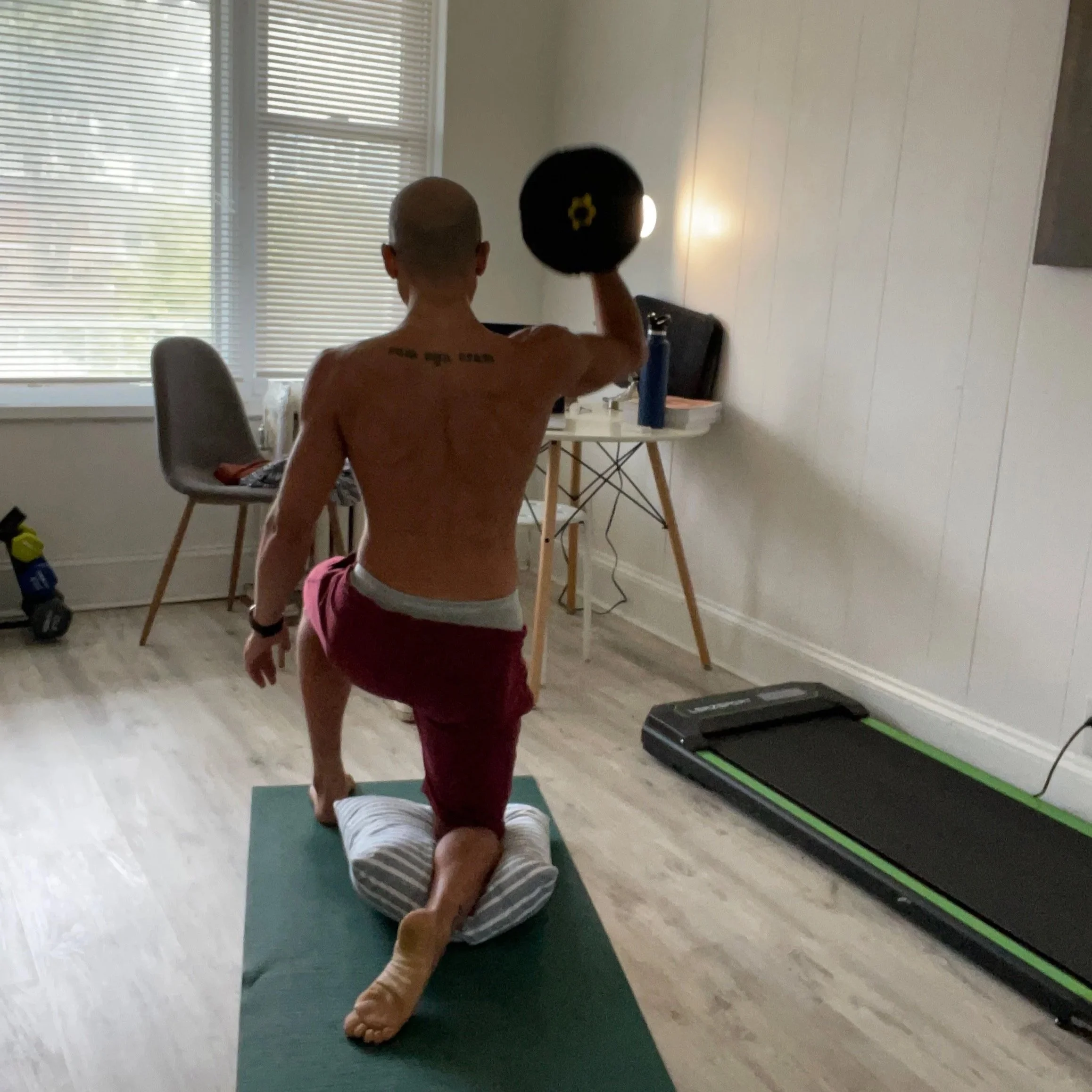
I used to believe that surfing was enough training for surfing, and that the only thing in the world that could help you improve your surfing was by just getting in the water. I thought that only pro surfers had the time to cross train, and that for the rest of us normal surfing sessions would have to suffice because there's just not enough time to both train and surf. I was wrong on both accounts. Yes, it is the case that surfing more will help you become a better surfer. It is also the case that no matter how often you're able to get in the water, training for surfing will enhance your overall surfing fitness and skill set. Establishing a surf fitness routine becomes even more paramount for those whose access to surfing is either seasonal or limited to weekends and trips.
I didn't start training for surfing until I was 41 years old (2022). You can read my article From Skinny Fat to Shredded and Shredding to learn more about that. What changed? I was in pain and didn't like the way my pants were fitting. I was convinced that it was either going to get better or worse, so I made an active decision to get better. I hired a coach and started working out five days a week in addition to yoga and surfing. The results speak for themselves.

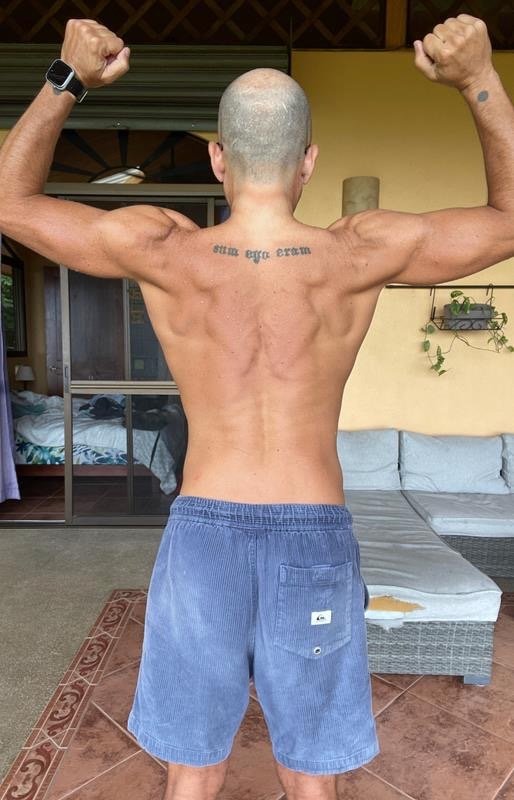
I know that there are purist pockets of surf culture that are averse to the gym bro lifestyle. I get it. Even though I workout and assign training programs, I'm still not pilled on going to the gym, lifting heavy weights, eating supplements, and trying to get as big as possible. All of my surf specific training is geared towards at home equipment and things you can do with your body weight. I do use weights — dumb bells, kettle bells, resistance bands, medicine balls — but a majority of my workouts are designed to be portable, and many only require a yoga mat.
My Surf-Specific Training Philosophy
"Surf-specific" training is specific to ability level, fitness level, and one's athletic, health, and aesthetic goals. To accurately gauge your specific surfing level, be sure to read my article What Level Surfer Am I? An Honest Self-Assessment and download the free PDF.
By level:
Pre-beginners, beginners, and advancing intermediates — need surfing movements like "surf burpees" and "pumping simulation" built into their routines so that their bodies can learn specific surf movements. Non-expert surfers need to put their bodies into positions that they have trouble achieving in the surf, so that when they do surf they're not trying to activate dormant muscles and movement patterns.
Advanced surfers and experts — more variables. Surf-specificity might look like doing things that reduce pain from chronic overuse and strengthening muscle groups to support old injuries. It may also include doing plyometric jumps and twists to assist in attaining "pop" and rotation for advanced maneuvers like airs and tailslides. Additionally, lifelong surfers may want to train in their opposite stance — so goofies do things regular foot and vice versa — to counteract a life of loading up asymmetrically along one axis.
Surfing is a workout and we surf at varying levels of intensity. We want to adjust our workout schedules up and down to support how much we are or are not surfing.
The non-negotiables:
Mobility must be at the heart of any surf-specific training program, and it's not enough on its own. I have been practicing yoga for 25 years. It probably saved my body from falling apart before 40. I believe that every surfer needs both a dedicated stretching or yoga practice to complement more rigorous resistance training. Every workout ought to contain a warm up and cool down process that includes stretching.
Resistance training with weights and bands is crucial for building bone and muscle strength. If a person is trying to put on lean mass, it's vital. And for those who are looking to lose body fat, it's just as, if not more important than sustained Zone 2 cardio. But we do not need to progressive overload the way other athletes might want to. Progressive overload is the weight training concept that you slowly increase the amount of weights that you lift in order to grow stronger. If strength is a serious goal you will need to employ this technique. For surfers who want to stay lean we can be moderate with progressive overloading. If you're surfing a lot you might even find that pushing harder with weights becomes difficult on fatigued muscles. Yes we need to lift weights, but we need not over do it.
Aerobic and anaerobic cardio capacity. I'm not a runner. I hate running. And I'll never assign running to a client. I don't find running aspirational, and it's certainly not the silver bullet for fat loss. What works better?
For steady state cardio nothing beats walking. While 10k steps a day is an arbitrary number — you could just as easily say 70 minutes or 2.5 miles a day — consistent walking is longevity and fat loss gold. It's also great for cognitive function.
For aerobic and anaerobic activity nothing beats HIIT and circuit training. You can scale up or down on the cardio intensity depending on complexity and nature of movements, time doing a single move, and equipment used. For example, 2 minutes of jumping rope is just like getting caught in the impact zone, whereas 45 seconds of high knees is like a moderate paddle out. At 15-45 minutes HIITs are also great time savers. They are my go-tos both for personal maintenance and for busy clients.
Swimming is also excellent cross training for surfing, but not everyone has access to a pool. If you do, consider adding laps to your weekly routine. I have gone through various periods with and without swim training. Beginning swimmers will need to hire a teacher for form and breathing.
Self massage with a foam roller, massage ball or peanut roller is non-negotiable for people who plan to surf for life. Learn how to massage yourself. Do it multiple times a week, if not a little every day. Our bodies fall into rigid patterns. Muscles get locked. You need to break it up. Sure, go get a real massage too. Those feel great. But you can get similar results at home without breaking the bank.
Breath training is another non-negotiable training element. I learned my breathing techniques from my astanga yoga practice and from years of amateur sports as a kid. When doing steady state cardio you want to focus on nose breathing. This keeps oxygen in your blood stream steadier and helps your heart handle the load. For lifting weights and doing body weight moves you need to be aligning your movements with your breath. Inhale to push and exhale to release.
General principles:
Go slow and pay attention to form. If you're training through an app like SurfReady365 and watching form videos, pay attention to the movements. Use a mirror to see if you're doing it correctly. Take videos of yourself and send them to your coach. If you're working with a personal trainer in person, they ought to help you out here. It's not worth jamming in moves at speed if your form is off.
Listen to your body. If you are in acute pain do not press through it. Be knowledgeable about your injuries and work with them and around them. Bring whatever you have learned from physical therapy into your workout routines.
Do not be fooled by workout programs, apps, and trainers who boast a program with a fancy name, talk shit on other modalities, or who swear that they've discovered the only way to get and stay fit. Many modalities and tools can help you surf better for longer. The key is to do something more in addition to surfing and stretching.
Working out at all is great. Working out and having accountability through a coach is better. Get help at whatever level you can afford.
You cannot out train a shitty diet. Remember that while surf specific training is great and absolutely necessary if you want to surf better for life, you cannot escape the fact that you will have to dial your diet. For how I fuel read my complete nutrition post.
Training at Home Before and Between Trips
Some context: I live in NY (for now) and there are not always waves. Our swell events last 24-48 hours max. In between it's small scale windswell if you're lucky — never enough to really get the heart pumping. It can go flat for weeks. I go on international coaching trips once a month or every other month. On these I put in ten to fourteen 16 hour days cooking, driving, surfing, and coaching. Then when I come home I focus on content generation, virtual coaching, and making sure the business house is in order (yes all that boring office work stuff that involves sitting on my ass). I need to be ready to surf whenever there are waves here and to have sustained energy for trip output.
A little more context: I'm a morning person. I wake up between 430-530a every day. I'm absolutely dead in the afternoon. Thus I never workout in the afternoon or evening beyond yoga or surfing. If I am in an intense training mode and have a morning surf planned, I get in stretches or a HIIT in the dark before I motivate to get to the beach. Usually if I do not workout before 9a, no workout is going to happen.
The 4-week training block leading up to a trip:
Week 1 — Build up: Build my workout program to stick with through the block. I want to memorize the movements and target specific muscle groups to ensure improvement in those areas. I commit to training 5-6 days a week in addition to stretching and surfing, but I stay at lower ends of reps and weights. On days I also surf I will skip the extra workout.
Weeks 2-3 — Full steam ahead: Ramp up reps and weights across all workouts. Commit to working out on surf days, unless it's a full on epic all day surf. Make sure afternoon stretching or full yoga are in place.
Week 4 — Keep up but taper down: Basically looks the same as the hardworking part of the block, but two or three days before the trip I'll opt for HIITs and yoga over full on strength days.
Sample week at home
Monday: 10 min warm up with walking and stretches. 30 min HIIT focusing on core, glutes, and hamstrings. 15 min cool down with walking, stretches, and massage ball. Afternoon yin or recovery style yoga for 20-40 min.
Tuesday: Full upper body strength session at about 90 min (including warm up and cool down walking, stretches, massage ball). Afternoon yin or recovery style yoga for 20-40 min.
Wednesday: Full Astanga yoga practice for 45 min. Maybe a light surf at the local. Afternoon yin or recovery style yoga for 20-40 min.
Thursday: 10 min warm up with walking and stretches. 40 min circuit focusing on cardio, stability, and core strength. 15 min cool down with walking, stretches, and massage ball. Afternoon yin or recovery style yoga for 20-40 min.
Friday: 10 min warm up with walking and stretches. 25 min HIIT focusing on cardio, core, and lower body. 10 min cool down with walking, stretches, and massage ball. Afternoon yin or recovery style yoga for 20-40 min.
Saturday: No formal workouts. Usually coaching on beach and in water. Or just a full on rest day.
Sunday: Full Astanga session in the early morning. Followed by a light breakfast. Then I do a full 60-80 min strength session with my wife. This is "family workout day." Nothing in the afternoon.
How I Train During Surf Trips
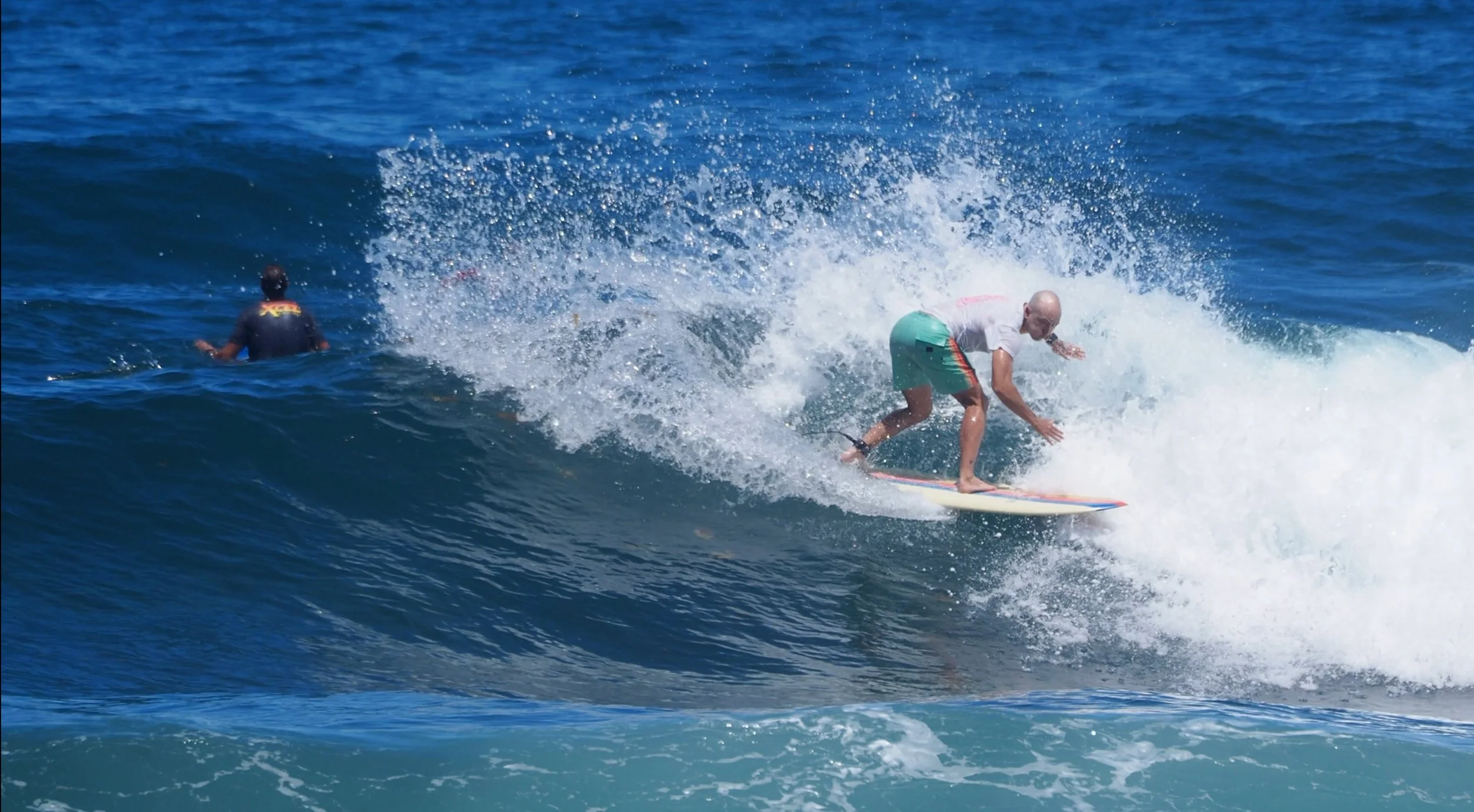
Slicing and dicing at Soup Bowl. Surfing is a workout.
When I'm on a surf trip the focus shifts to surfing, surfing, and more surfing. I also have other coaching duties: cooking, driving, video review, grocery shopping, and running clients through their own training needs. The non-surfing focus is mobility, mobility, mobility. When you're surfing this much you need to stretch. If I am looking to actualize even more fitness gains I'll throw in 2-4 early morning HIIT or circuits per week.
Sample week on a surf trip
Monday: 10-30 min yoga or modified stretching routine. 2-4 hour morning surf and coaching session. Lunch. Chores. 2-4 hour afternoon or evening surf and coaching session.
Tuesday: 10 min stretching session. 20 min HIIT. 1-3 hour morning surf and coaching session. 1-3 hour afternoon surf and coaching session.
Wednesday: 15 min stretching session. 2-4 hour morning surf session. 1-2 hour midday surf session. 1-3 hour afternoon/evening surf and coaching session. 10 min evening stretching session.
Thursday: 10-30 min yoga or modified stretching routine. 2-4 hour morning surf and coaching session. Lunch. Chores. 2-4 hour afternoon or evening surf and coaching session.
Friday: 10 min stretching session. 20 min HIIT. 1-3 hour morning surf and coaching session. 1-3 hour afternoon surf and coaching session.
Saturday: 10 min morning stretching session. 1-3 hour morning surf and coaching session. 1-3 hour afternoon surf and coaching session.
Sunday: 45 min full Astanga practice. Lazier, restful morning. 3-5 hour midday through evening surf and coaching session.
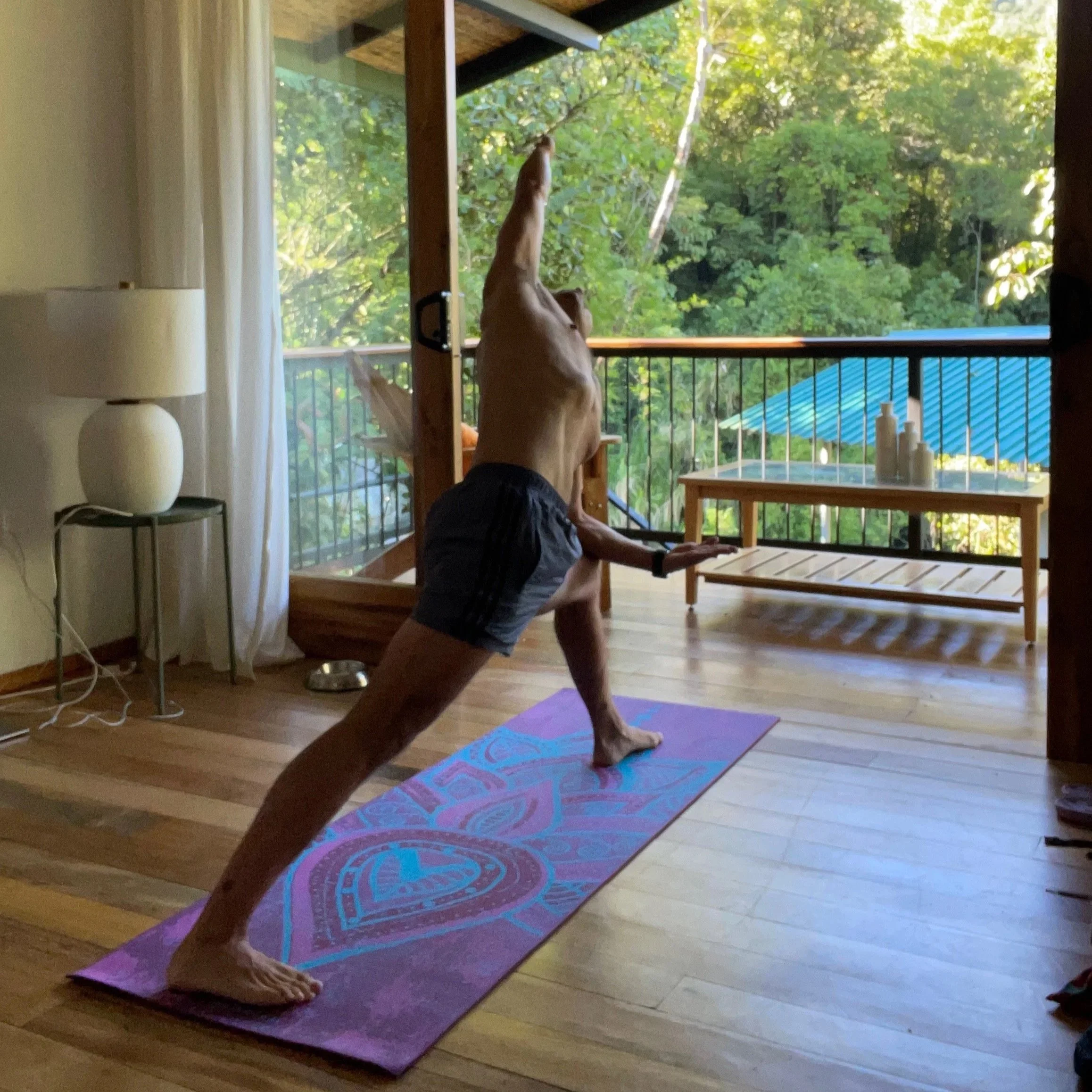
The side angle pose is one of the best for surfing.
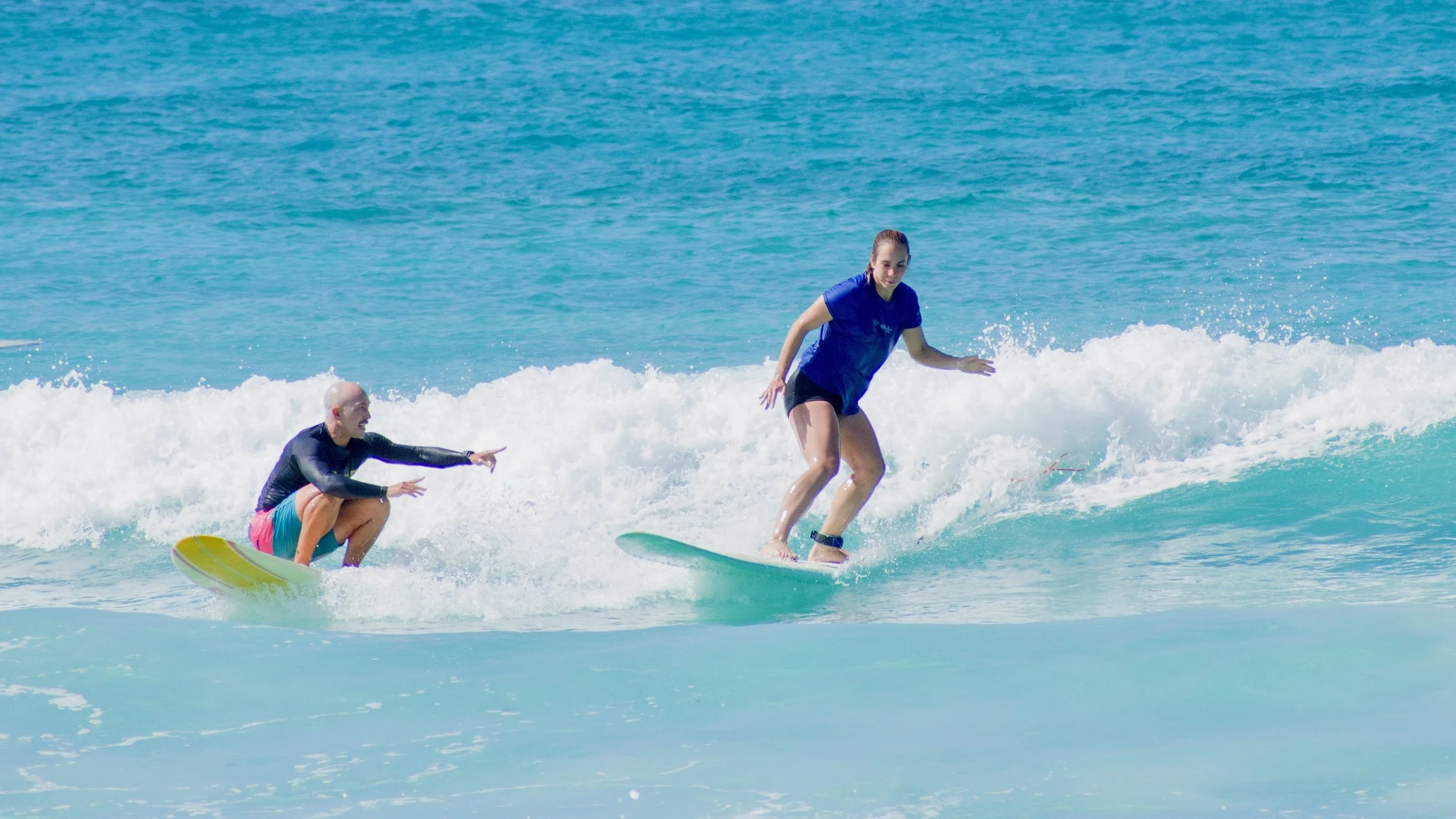
What in-water coaching looks like for advancing beginners.
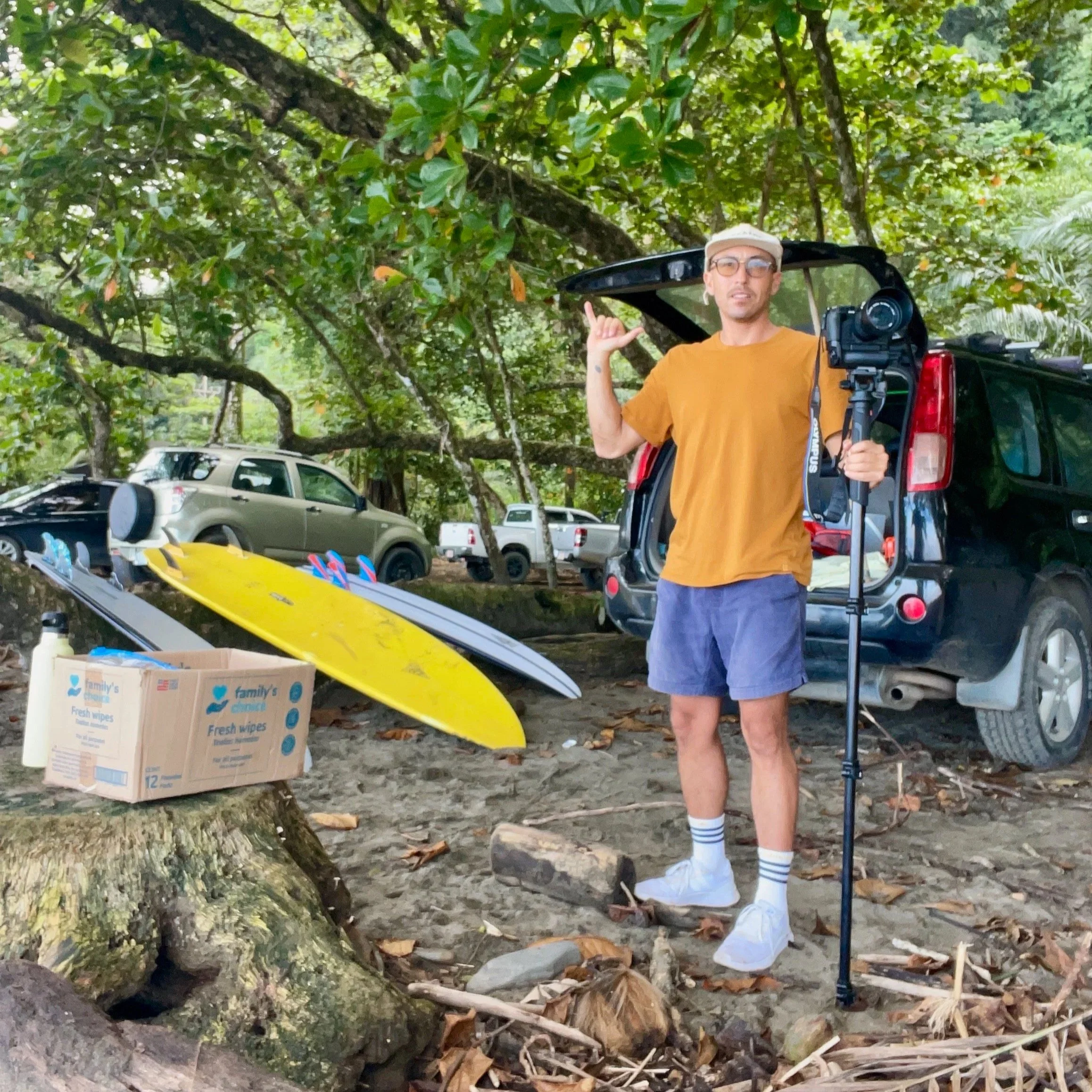
And all coaching inevitably means I’m on the beach getting your footy!
A note on what constitutes a "surf and coaching session": We go to the beach and assess conditions. I work with all levels of surfers. If it's small and I'm working with pre-beginners and beginners then I go out in the water and help them with board control, paddling, and wave judgment for at least an hour. Then I come in and video them/let them try on their own. They will come in for rehydration and tips. I may paddle back out with them or paddle out to free surf if I'm feeling it. Basically how much I free surf depends on how good the waves are and my energy levels. If it's small and not enticing I will only surf to help people get better. There is no need for me to push my personal practice in sub par conditions. These lighter days I can get in a HIIT or a longer yoga session. If I'm working with advanced beginners and intermediates, it's similar, but they are more self reliant so I can video and beach coach for longer on days when the surf is down. If it's pumping, again, I'm going to both help them in and out of the water and get in at least two-three solid free surfs for myself. My surfs last anywhere from 30 to 120 minutes. I rarely surf longer than 2 hours at a time unless the waves are extra, extra good.
How I Recover from Surf Trips
After a surf trip I've just moved and surfed my brains out at a scale that looks like ultra marathonning. Add international travel on top of that and when I get home I am absolutely zoinked. I also have a lot of intellectual/cognitive work to do in terms of getting everyone their trip write ups and videos, and scheduling follow up calls. Even so, I tend to take at least a full 48 hours off. I may walk a little on my walking pad or with Pita to the beach or around whatever city we're in. I will do light stretches, maybe. And then I go back to that ramping into my next training block cycle per the above.
Sample trip recovery week
Monday: Let's say I returned from the trip on a Sunday night, late. I'll sleep or stay in bed until 630 or 7a. Then I'll get up, walk Pita, and then hit the couch for reading. I may nap at various other parts in the day. But mostly I'm not doing much of anything.
Tuesday: My circadian rhythm will probably start returning to normal and I'll wake up at 530 or 6a. 15-30 min of very light yin style yoga or stretches. Massage ball on my glutes and shoulders against the wall. Walking Pita. Maybe 30-40 min on the walking pad. Then I try to get the clients their notes and vids. Will do some light office work like banking and accounts. Evening walk with Pita.
Wednesday: Pretty much the same as the day before. If the waves are absolutely pumping I will motivate. I can always motivate for pumping waves. I will start planning my next training block in the SurfReady365 app.
Thursday: Here's where I'll move into that ramping back into it phase. I don't go straight for HIITs. I always start with a full 45 min Astanga practice. Keeps me limber and reactivates me to do strength work.
Friday: A modified recovery workout, stretches.
Saturday: Nothing extra except walking and coaching if conditions call for it.
Sunday: Time to get the ball rolling again. Yoga. Family workout, and we're off to the races.
A Few of My Personal SurfReady365 Surf Training Workouts
I mix it up from training block to training block, customizing workouts for myself and my clients based upon injury statuses and energy levels. I thought it would be helpful to show you a few of my go-tos for all levels.
Sample Surf-specific Workouts for Advanced Beginners and Intermediates
Sample Surf-Specific Workouts for Pre-beginners and Beginners
Why This Matters for Your Surfing More Than You Think
Surfing is so amazing that you want to do it for as long as you possibly can. How big or small that window is will depend on your overall health and fitness. If surfing for the rest of your life is a priority then you need to get on some sort of program asap. This is especially the case if you struggle with fear and anxiety in the lineup. I wrote a whole post that connects body confidence to fear in surfing and you should read it: The Hidden Connection Between Body Confidence and Ocean Fear. A snippet:
“When you’re physically confident, you surf more challenging conditions. When you surf more challenging conditions, you develop better wave reading, positioning, and decision-making. Those skills then allow you to surf even more challenging conditions with greater competence. But this feedback loop only activates when you have enough physical confidence to enter it in the first place.”
Last, you must remember that I'm a Spinozist. I believe that greater joy is always possible when you increase your capacity for virtuous action. I believe that there are real, measurable, and attainable ways to increase this power, especially in the surfing and fitness context. The fitter you are, the better you surf. The better you surf, the more joy you create for yourself and for others (because they see your excellent surfing and it makes them joyful). The goal here at Conatus Surf Club is always to increase our capacities for joyful actions because that's what any conatus is always endeavoring to do in the first place. We can help it along by training to surf and becoming SurfReady365.
If you want a glimpse at the full system — workouts, meal plans, tracking methods, and the complete training philosophy — download my Road Map to Surfing Fitness. It's $27 and it's the same framework I use with my coaching clients year-round. If you want results that will last the rest of your life, schedule a Surf Journey Assessment call, and let's get you shredded and shredding as soon as humanly possible.