

Yes, surfing is dangerous. There is absolutely nothing safe about surfing. Zero. Zilch. Nada. If you’re looking for a carefree, gentle, and mellow way to enjoy nature, stay fit, and avoid injuries, you’re in the wrong place. Surfing is a categorically dangerous activity that will inevitably make you confront some of your most unconscious attitudes towards death, dying, and suffering. No, not even if you only target small waves on a soft top at a gentle break are you safe in the ocean. Do not let any coach or school delude you into thinking that this is ever the case. It is true that there are surfing scenarios that are more and less dangerous. Nevertheless, there is always some danger present in surfing.
Now that we've gotten that out of the way, we need to:
Discuss specific dangers in surfing and categorize them in terms of kind and likelihood
Talk about one's own attitude towards risk and personal, emotional/intellectual thresholds for danger, death, and suffering
Lay out how we can know our limits and have fun, regardless of the fact that surfing is an inherently dangerous activity, i.e., how we can surf more safely despite the dangers
Surfing Dangers by Category
The Ocean and Coastline Themselves

A gorgeous wave in the middle of a large bay, connected to the entire world ocean and an ecosystem we can hardly even see. But we can feel it. It’s powerful.
The ocean is big. It makes up the majority of this planet we call home. It is constantly moving and it moves in ways that escape our ability to predict in a timely manner. In terms of force, the power of the ocean is unquantifiably greater than that of the agency of any particular human being. When I was young my dad used to tell me all the time, "Never turn your back on the ocean." Rogue waves, even if they're only waist high, can take you out if you're not paying attention.
The ocean is always interacting with the coastline. In technical, oceanographic language, the area where the ocean meets the land is called "the surf zone." The water is necessarily shallower closer to shore, and therefore there is more surf activity. But the coast can have dangers of its own: jagged or slippery reef, rocks, cliffs, broken shells in the sand, narrow areas to exit and enter the surf. A hard bottom or even just packed sand can break any part of your body if you fall and land on it wrong. In places like Pipeline in Hawaii, people have been shoved into underwater caves under coral heads and not been able to make it to the surface alive.
And we must state the obvious: the ocean is made of water. Humans cannot breathe in water unassisted. There is always a risk of drowning.
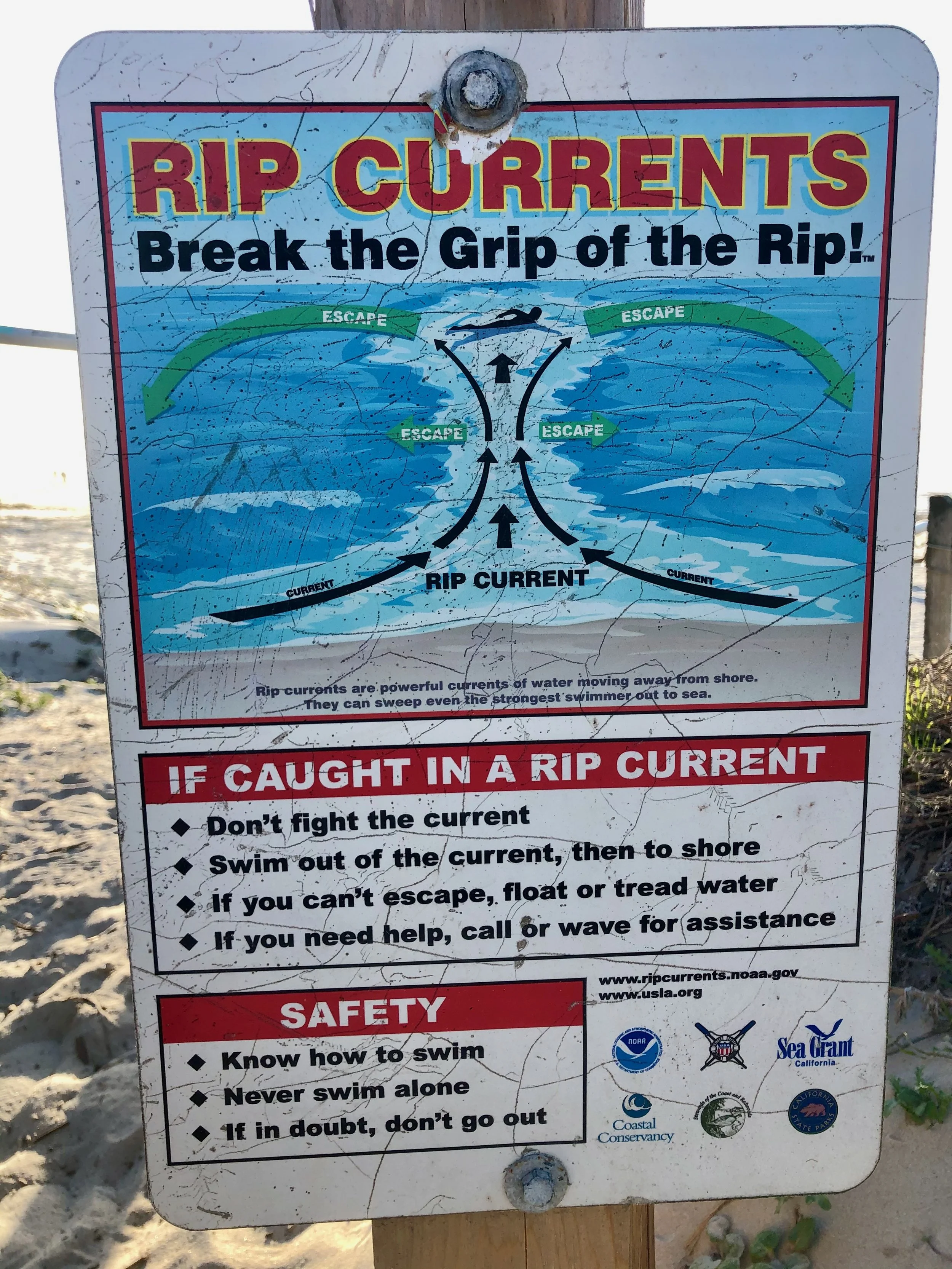
Always pay attention to rip current safety signs.
The interface of ocean and coast is what causes rip currents. Water is traveling in and out from the coastline at all times. In so doing it travels along the most familiar or well worn paths it can find. These are the channels or areas of deeper water/coast. In reef and point breaks made from rocks and coral, channels are more easily identifiable than they are at beach breaks. Some beach breaks with well defined sand bars will have rips form in similar locations, but more often than not you get roving rips. These are identifiable by the "ripped up" and choppy water they create — yes even in glassy or clean, offshore conditions.
Sun and Weather Exposure
While our sun might be a tiny star in terms of universal standards, it's enormous in terms of human standards. Not only is it also very hot, it emanates UV rays that can burn us even when there are clouds out. In some areas of the world, holes in the ozone layer make the sun's rays that much more intense. Sun burn is always a risk in surfing, even in cold climates. The warmer the climate, the more skin exposed, the greater the risk of sunburn and heat stroke.
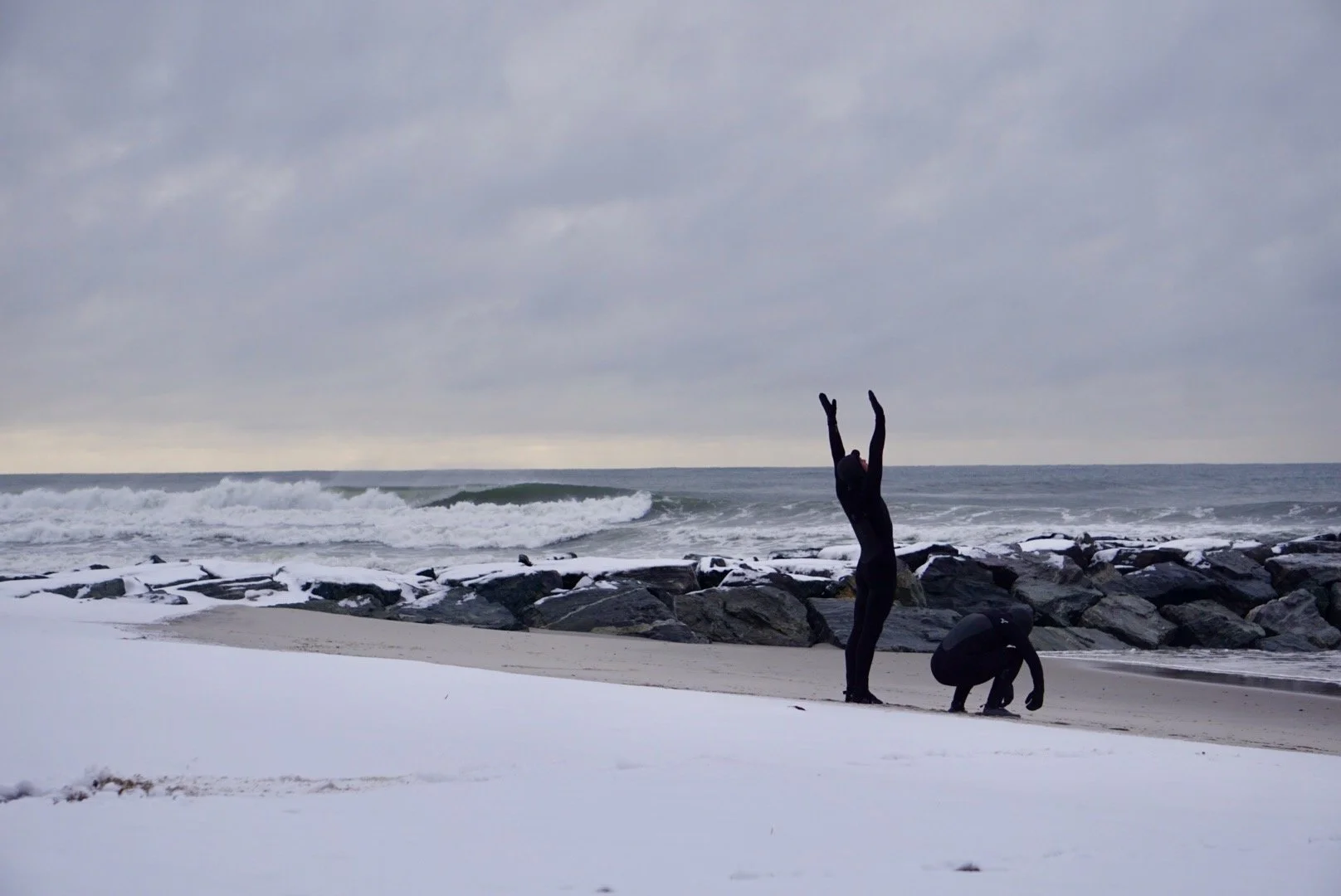
Snow does not stop New York surfers from getting out there, but there are different risks in the cold.
Extreme cold, wind and frost bite are all dangers caused by the weather and climate. You can get frostbite in a 5mm hooded suit, wearing 7mm mittens and boots. And once you get frostbite the area affected never improves; it only becomes more sensitive to future interactions with the cold. Hypothermia is also a risk and you'd be surprised at how easily we surfers can start to exhibit symptoms of hypothermia: uncontrollable shaking, teeth chattering, completely numb hands and feet, a feeling of "being dumb" or "slow" in thinking and reaction times. A two hour session in 50 degree water can get you there quicker than you might think.
And last, but not least, lightning. Lightning strikes rarely kill surfers, but it does happen. If you see bolts, you ought to bolt.
Animals
This danger looms larger in the imagination than the others. It's a lot more exciting to make a film about great white sharks who have developed a penchant for human flesh than it is to make one that follows the vicissitudes of ongoing mild hypothermia. Nevertheless, while the dangers from animals in the sea are probably blown out of proportion, they're also very real. When we enter the ocean we are no longer apex predators. We're soft, squishy penetrable humans with soggy flesh.
As is well known, the main apex predators we need to worry about are sharks — and specifically great whites, bulls, and tigers — and saltwater crocodiles. And yet many other animals can cause us grief:
Sea otters and sea lions can and will tug your leash and give you a nip if you get too close
Elephant seals are downright aggressive. Stay away.
Stone fish and lion fish can paralyze parts of your body if you're stung
All manner of jelly fish, same
Coral reef is technically an animal, and you don't want to touch it if you can help it. When it's live it's razor sharp.
Sea urchins operate by a similar defense — on a 2022 trip to Mexico, a whole crew of us spent the afternoon in a local clinic getting spines pulled out of our feet
Sting rays have a barbed tail that will whip you in the foot or leg if you accidentally trample them in the shallows. The barb can get stuck and there's a slight venom that makes the pain pretty brutal.
On a recent trip to Costa Rica, I was attacked by a roving swarm of killer bees while checking the surf. Sometimes we discount the wildlife that exists on the shoreline. I imagine Alaskan surf guides have a whole protocol around bears. In some places roving bands of wild dogs can be an issue too.
Surfboards
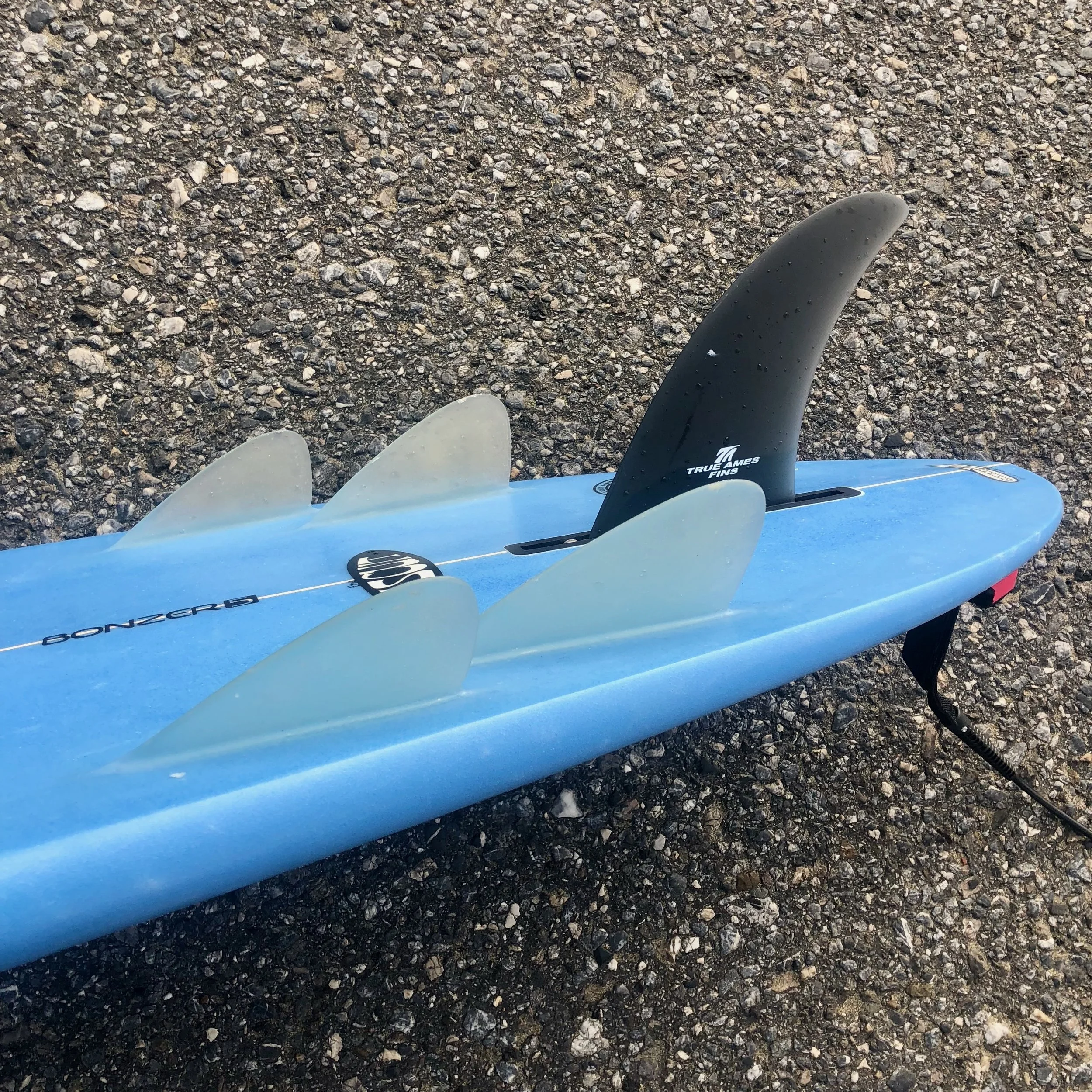
The Bonzer fin set up is particularly vicious looking! So many opportunities to get gashed.
Surfboards are dangerous. I mean have you looked at the things?! They're veritable war weapons. One style is even called a "gun"! I am not sure it's even worth debating or detailing which shapes and constructions and areas of certain boards are more dangerous than others. For example, while a pointy nosed shortboard can poke your eye out, a blunt nosed longboard can knock you out cold. Don't even get me started on fins. Have you had a look at them? One to five spiky blades on the bottom of your board.
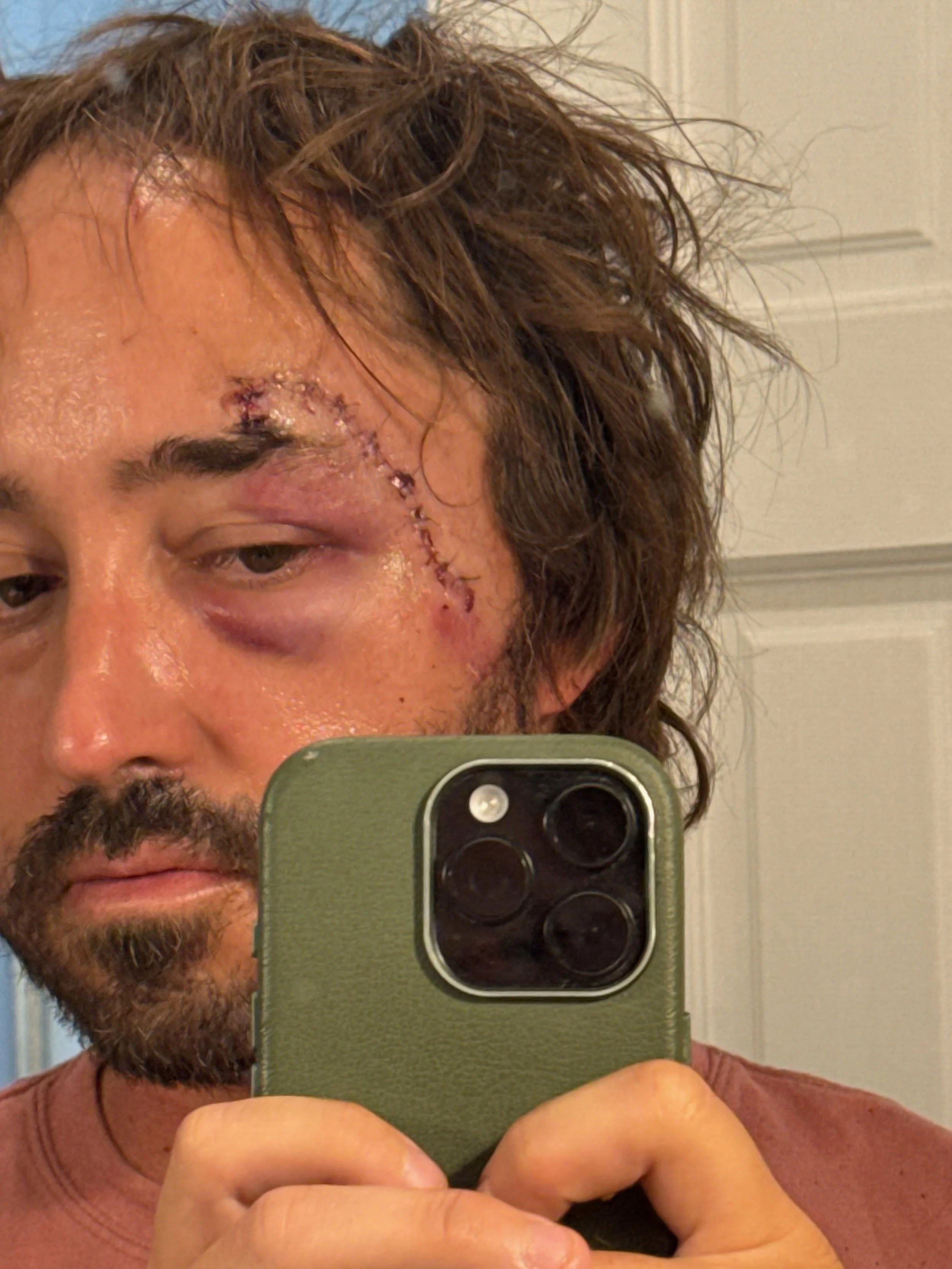
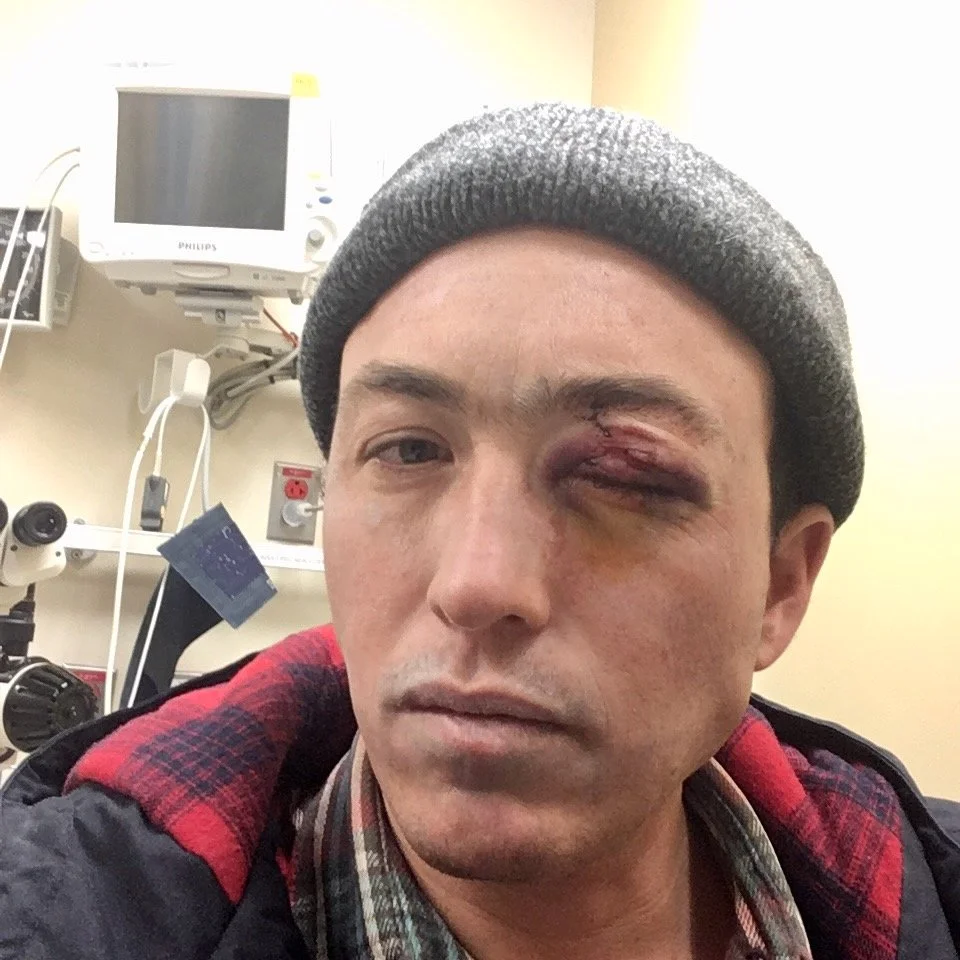
Brant with 35 stitches after his own boozer bonked him hard during a hurricane swell in New York.
What about soft boards and soft fins? Yes, they reduce some of the danger, but they're not completely safe. If a person hits you in the face at speed on a soft board you can still get concussed. The difference is in degree. Your skull might not also split open, but then again, it still could. Plus, as I have written in my best beginner surfboard guide, sometimes soft boards give people a false sense of security, which makes them more likely to do stupid, reckless shit in the water that they would not do on a fiberglass or epoxy surfboard.
We should also mention leashes. Leashes can harm you and your board. They also give people a false sense of security. Just because you are attached to your board by your leash, doesn't mean you're exempt from the norm that we don't just toss our boards around willy-nilly. Leashes can hog tie you underwater, get caught on reefs, rocks, and man made structures, and wrap around various other parts of your body. If you grab the leash or rail saver (area where leash attaches to the board) just before a wave is about to take your board, it can rip your hand open (this happened to me once when I was 12 and I never grabbed the leash for that purpose again).
Ourselves and Others
This list is not about ranking the dangers inherent in surfing, but if we were to, this category would probably be at the top of the list. As dangerous as the ocean and surfing may be, we are our own worst enemies. We make errors in judgment and these can cost us dearly. When it comes to sharing waves with others, we tend to be greedy, defensive, and excitable, which disables our capacity to reason clearly. We're often surfing in environments with mixed levels of surfers. Advanced surfers who are grumpy and territorial may bruise our egos or our sense of bodily autonomy. Beginning surfers who are non-maliciously ignorant may lose control of their equipment and accidentally run us over. Our inability to ever fully control what others are doing may result in pissy moods despite the fact that we're going out there ostensibly to do something enjoyable. To be sure, lots of lovely things come from surfing with others. This category merely stands to mark that humanity can be a source of pain to itself in general, so it stands to reason that this is also the case in surfing.
[READ: How to Deal with Aggressive Surfers]
Surfing is extremely demanding from an athletic point of view. You can easily push yourself too hard or have an accident. Common athletic injuries in surfing include: sprains, strains, and tears to knees, ankles, shoulders, and hamstrings, broken bones, punctures, gouges and lacerations, dislocated knees and shoulders (shoulders more common), broken ear drums, and concussions.
Man-made Coastal Features
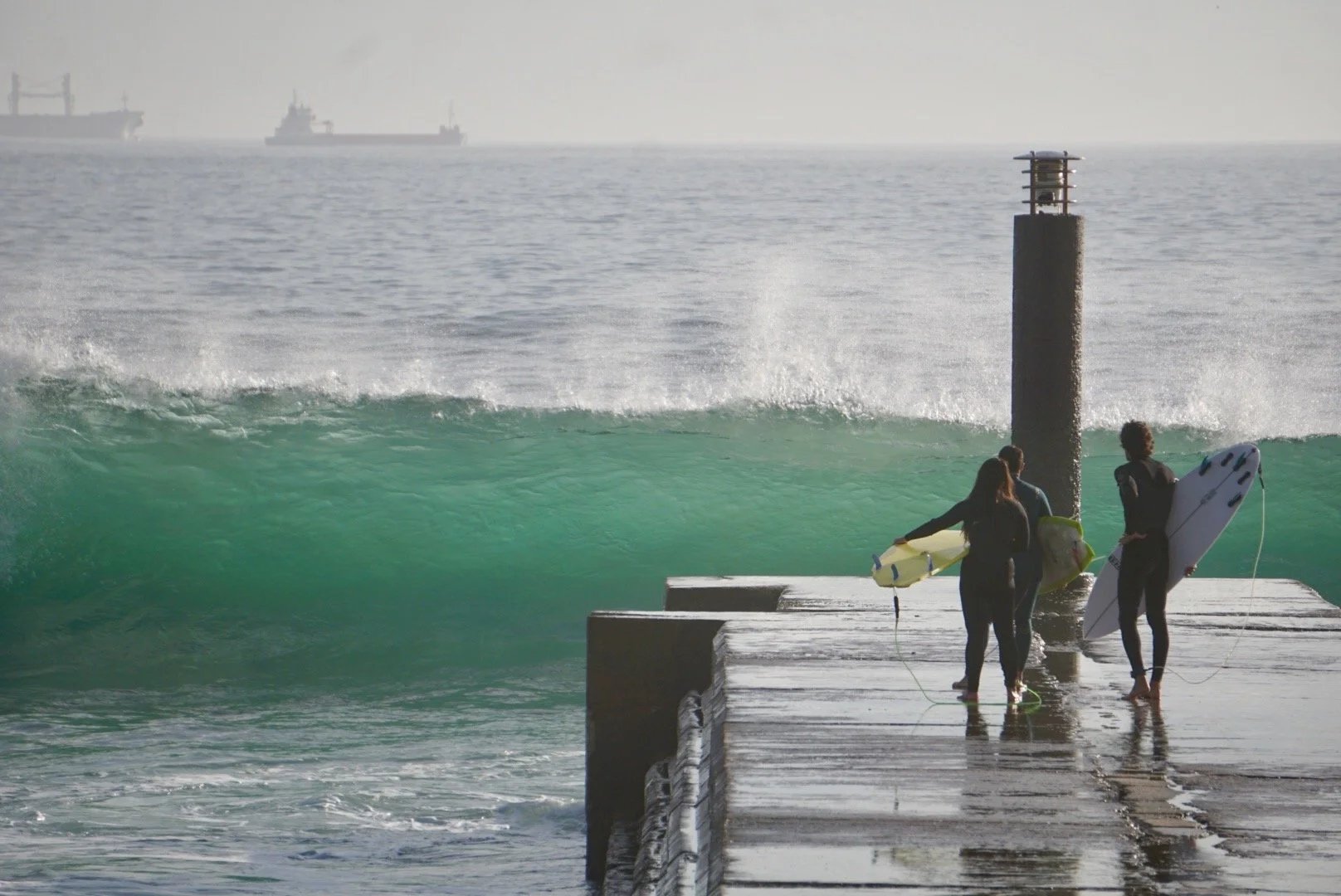
Concrete piers can be useful for accessing the surf and protecting the shore. They must also be treated with caution. You do not want to slip and fall or get caught between a wave and this gnarly man made structure.
Pollution and Water Quality
Sewage treatment plants tend to be located near the ocean. In the cases where a population doesn't treat their sewage, it's usually deposited in rivers and runs into the sea. We can derive all manner of infection from surfing in polluted water and the outcomes vary in degree from run of the mill sinus infection to a staph infection in your brain.
Litter and trash detritus can also be harmful. Broken glass bottles at beaches popular for sunset partying can ruin your dawn patrol. On the grimier side, I have seen hypodermic needles littered on shorelines. You definitely don't want to step on one! And while I've not read about any sort of downstream health complications from oil and gas run off from streets and offshore oil drilling, I'm sure there are plenty. I can say with certainty that when you surf somewhere like Campus Point in Santa Barbara, California, which sits just inside of a number of offshore oil wells, gobs of the black stuff can seriously destroy your wax job.
Being-Towards-Death and Anxiety: One's Personal Relationship with Danger and Risk
The philosopher Martin Heidegger developed a concept he called "being-towards-death." In Heidegger's view "Being" is time. Our awareness that we exist at all comes from the larger temporal structure into which we are thrown. He argues that whether we are aware of it or not we are always anxious about the fact that we are constantly moving towards our inevitable demise. He makes a distinction between this low level anxiety that we feel in everyday life and the acute fear we feel when we see something like a ten foot wave about to break in front of us in two feet of water. Both feelings are related to the fact that we will one day die, but they are distinct in their quality and degree. Acute fear is when you take the dread of low level anxiety and turn it up to eleven. But this is not the same for everyone. Most of us register our finitude and express our anxiety about it differently. Put more simply, some of us thrive on the thrill of turning the fear volume up — doing so makes those sorts of people feel more alive —; others of us are so beset by it to the point of paranoid delusion and hysteria and probably require some sort of SSRI just to get to the store and back home; and then there's a whole host of attitudes and positions in between.
If you're taking up surfing at all, some part of you enjoys risk. Your being-towards-death-style is comprised of a desire to overcome some of your basic anxieties about not having lived a full life. For you life would not be full if you didn't learn to surf. And part of the fullness that surfing brings to your life is the fact that you are doing something both hard and dangerous. You are practicing what the philosopher Nietzsche calls "self-overcoming." "But I only ride baby waves on sunny days," you say? Fine, you're doing the least scary version of surfing, but that's still confronting your finitude. There are many people who won't go near the ocean, let alone dive fully into it and spend hours amongst the various animals, pollution, weather hazards, and manmade structures that could harm them. If you surf you are the kind of person who would not consider a life well lived if it doesn't include going surfing. It's just that there do happen to be more and less risky ways of doing it. You can't eliminate all the risks, but you can account for them by deepening your self knowledge and by becoming more educated and skillful in your practice.
[READ: The Hidden Connection Between Body Confidence and Ocean Fear]
How to Be Safe and Have Fun Surfing Despite the Inherent Dangers
Regardless of risk profile, every specific surfing danger has a few sets of bodily comportments that can help us manage and mitigate the risk. If you get off on dangerous situations, that's not full license to be careless and reckless. You still need to consider that you matter to others and that others could be harmed by behavior we may want to call dangerously ignorant at worst and miscalculated at best. If you're a risk-taking beginner, you still need to learn the rules and norms of surfing before you start paddling out at heavy waves. And if you tend toward the more timid and risk averse, you may find that when you learn some crucial skills and make a few mindset adjustments, you will become game for more than you initially thought. Here are general rules for all risk profiles:
Learn as much about the ocean and how waves break as you possibly can. The more easily you can identify rip currents, areas to exit and enter the water safely, and areas to avoid the better. Watch surfers enter and exit safely and copy them. To learn more about how to read ocean conditions, start by downloading my free forecasting PDF. And be sure to read my blog post Types of Surfing Waves: A Coach's Guide to Reading What You're Riding.
Learn to paddle and control your board like a boss. The more efficiently you paddle, the more quickly you can get yourself (and others) out of any trouble in the water. The better board control you have, the less likely you are to hit yourself and others with your surfboard. Adjacently, the fitter you are outside of the water, the safer you are inside of the water. Read How I Train for Surf Trips.
Always carry some basic first aid in your car or backpack. Bare minimums: gauze, water proof tape, bandaids, ibuprofen (for pain), and alcohol swabs. If you are surfing somewhere new, do a quick check on local emergency numbers and clinic/hospital locations.
Use sun protection! I don't care how dark or light the pigment in your skin is. We all need protection, whether that's in garments or creams. Find the combo that suits you best, and stay covered. Don't forget those hands!
Know how often and likely it is that people are attacked by certain creatures wherever you're surfing. If you see a shark, paddle in calmly, but quickly (another reason to learn to paddle like a boss). Do not get off of your board! For crocs, same, but move more quickly on land as they can lunge in shallows and near shorelines. For stings and smaller bites from smaller creatures, control bleeding or pain with your first aid kit if possible, and then go straight to a lifeguard tower, local clinic, or hospital.
Buddy system. Unless you're in the risk-loving category, surfing with a friend is not only more fun, it's also safer. Even better if you have friends who are just a little better at surfing than you are. If you're all beginners, talk through conditions with one another and help one another learn more about the ocean and surfing etiquette.
Always have extra snacks, water, and electrolytes with you. You never know how long you might end up surfing for. You can avoid dehydration, hunger, and heat stroke by having extra fuel and water nearby.
Learn about the water quality in the areas you surf. In certain areas like Southern California, you're almost guaranteed a sinus infection after a rain.
Practice priority and turn taking in any lineup. The more people who practice wave sharing rather than wave hoarding, the safer we all are. This requires that you know your ability level. Take my test to find out where you stand.
Endeavor to keep improving your surfing. The better you surf, the safer you will be. If you're feeling it, take an ocean safety or CPR course. That's more a requirement for people who will become lifeguards and coaches, but it wouldn't hurt the common surfer either.
There you go. If you're a risk taker all of these still apply to you. You may surf alone more often than the risk averse and start pushing yourself into challenging conditions sooner. You may stay out longer when you see a few lightning strikes in the distance or a fin cruise the horizon. On the other side of the coin, if you're extremely risk averse and prone to a high level of generalized anxiety, you need to take more care with surfing. For a while you'll want to surf mostly with a coach or instructor until you've built up enough native confidence and made enough surf buds to go out on your own. You'll want to stick with soft boards and small waves for longer, maybe even forever. And that's totally fine. Just wear sunscreen and hydrate properly while you're at it.
If you're working through fear in your surfing — whether it's the ocean itself, your body, or the people in the lineup — that's exactly what a Surf Journey Assessment is for. $99, applicable to any coaching package or trip.