
Most surfers overestimate their level. Not because they're delusional, but because surfing culture doesn't have honest checkpoints. You've been surfing for three years, you stand up most of the time, people haven't screamed at you in a while — that feels like progress. Sometimes it is. Sometimes you've just gotten comfortable with a ceiling.
This guide gives you real behavioral markers, not flattery. It's designed to help you figure out what path actually makes sense for where you are — a surf school, a coach, a trip, more solo sessions, or something else entirely. Read it honestly. The only person you're fooling otherwise is yourself.
Want the full assessment with self-scoring checklist? Download the PDF here.
A Note Before You Start
There is no bad level. Pre-beginner is a completely legitimate place to be. Fear of big waves, or preferring to avoid crowds, tells you nothing about your skill — those are matters of temperament, not competence. A reckless beginner and a seasoned expert can both paddle out at an overhead reef break. Only one of them should. The goal of this assessment isn't to rank you. It's to help you know yourself in the water — which, if you've spent any time with philosophy, you'll recognize as the oldest and hardest question there is.
A note for returning surfers: if you surfed seriously as a kid or young adult and are picking it back up, your level depends heavily on current fitness and how much muscle memory has survived.
If you haven't kept up your fitness, start at beginner — the ocean doesn't care about your history, your paddling endurance does.
If you used to compete or were genuinely competent, you're probably still intermediate or expert, just deconditioned. Get in shape and the skills will resurface faster than you expect.
If you really struggle with consistency but fear is not an issue, you can go up one level from where you'd otherwise land.
If you categorically don't like larger waves but have a solid repertoire, you're an advanced beginner or intermediate who just doesn't want to surf big waves. That's a preference, not a skill deficit.
The Five Domains of Honest Self-Assessment
Look at each domain and mark where you land. Be specific. "Sometimes" usually means no.
1. Ocean Knowledge and Safety
Signs you have it:
You can identify a rip current from shore before paddling out.
You know what conditions are appropriate for your skill level and choose accordingly.
You understand right-of-way in the lineup and consistently follow it.
You know how to fall safely and protect your head.
Honest flags:
You go because Surfline says "good" without checking the actual conditions.
You've been in situations you couldn't handle and didn't see them coming.
You're unsure what to do when someone drops in on you or you drop in on someone.
2. Paddling
Signs you have it:
You can paddle for 60–90 minutes in moderate conditions without being gassed.
Your lower body is engaged and streamlined — not dragging like dead weight.
You can paddle into position and maneuver your board before a wave arrives.
You catch waves under your own power without needing to be pushed.
Honest flags:
You rely on instructors or friends to push you into waves.
You're exhausted within 30 minutes and spend most of the session sitting.
Your arms are doing all the work while your lower body sinks.
3. Wave Reading and Judgment
Signs you have it:
You watch waves from shore for at least 5 minutes before paddling out.
You can identify which peaks are breaking well before you paddle to them.
You read other surfers' positioning to inform your own decisions.
You've developed a feel for timing — when to commit, when to wait.
Honest flags:
You paddle out and immediately start trying to catch whatever comes.
You consistently misjudge waves — too early, too late, wrong section.
You don't understand surf forecasts and don't use them.
4. Technical Skills
Signs you have it:
Your pop-up is one fluid motion — not two stages, not a cobra push-up.
You look down the line through your takeoff, not over your shoulder.
You can perform consistent turns and clean kickouts.
You've been told — unprompted — that you look good on a wave.
Honest flags:
You're still working out the pop-up mechanics on every single wave.
You've never seen footage of yourself surfing and compared it to how it felt.
You pearl regularly.
5. Lineup Ethics and Self-Awareness
Signs you have it:
You sit in the right place for your skill level, not just the best peak.
You don't take waves you're not ready for.
You're aware of how your surfing affects others in the water.
You can honestly evaluate a session — what worked, what didn't, why.
Honest flags:
You go for every wave regardless of who's deeper.
You've been yelled at more than once for the same thing.
You struggle to identify what you're actually doing wrong.
Where did most of your checks land? Mostly in the positive columns across all five domains? Or are there whole domains where you're checking mostly flags? The answer tells you your level — and your next move.
What the Levels Actually Look Like
Find the description where most of your domain checks landed. Read the whole thing, including what is not in your level.
Pre-Beginner

You're probably here if:
You haven't surfed yet, or have only been pushed into whitewater once or twice.
You're still building comfort and confidence in the ocean.
You don't yet know how to identify rip currents or read basic conditions.
You're probably not here if you own a board and surf regularly — that puts you at beginner or above.
Beginner
You're probably here if:
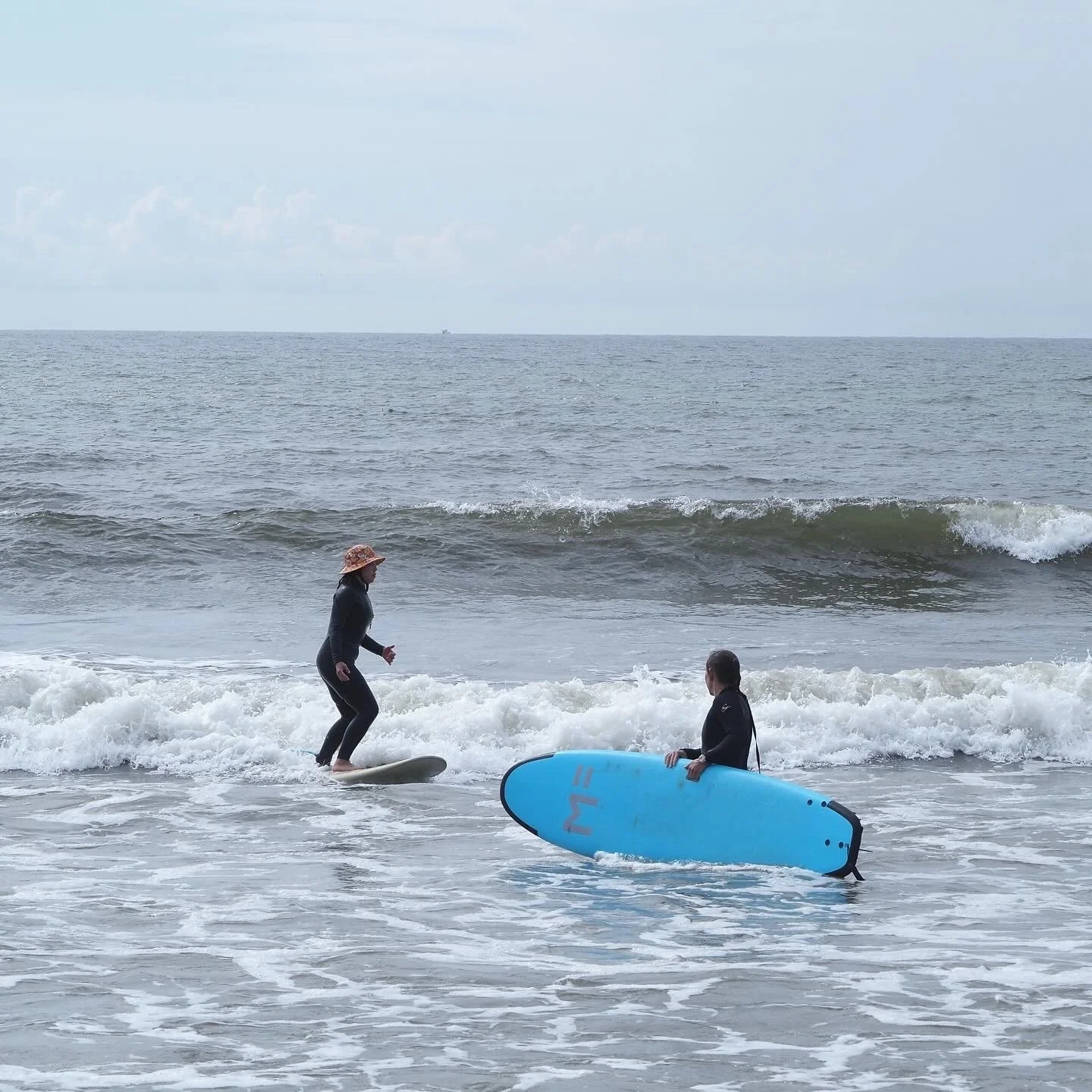
You can stand up in whitewater with reasonable consistency.
You're starting to catch unbroken waves — sometimes under your own power.
You're developing a feel for paddling, though technique needs work.
You're probably not here if you consistently read waves or pick good ones independently, or if you know where to sit in a lineup and how to navigate a crowd.
Advancing Beginner

You're probably here if:
You're catching unbroken waves consistently under your own power.
Your pop-up is mostly clean, though still working on fluidity.
You have a developing repertoire of maneuvers.
You consistently see the line of entry on the wave.
You're probably not here if:
You're pearling more often than not — that's beginner.
You can't ride on the wall of waves at will — that's beginner.
You don't know how to control the tail of the surfboard — that's beginner.
You're flowing between maneuvers with ease — that's expert.
Intermediate
You're probably here if:
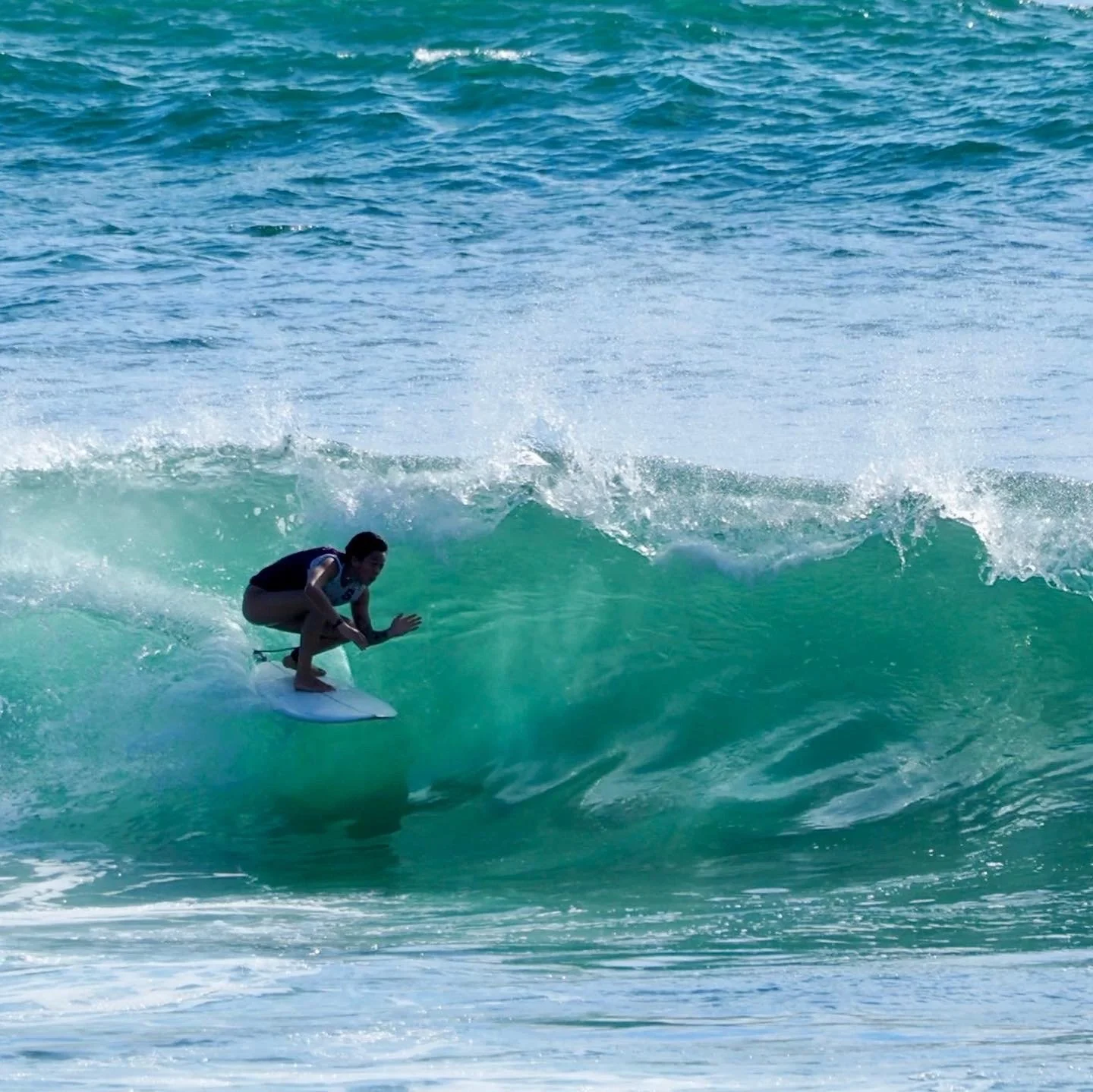
You're catching unbroken waves consistently and paddling out alone at familiar breaks.
You have a small repertoire of moves but struggle to replicate them on demand.
Your timing is inconsistent — sometimes perfect, sometimes baffling.
You've seen yourself on video and wanted to quit surfing immediately.
You're probably not here if you're still pearling regularly (closer to advancing beginner) or flowing gracefully between multiple maneuvers (that's expert territory).
Advanced / Expert
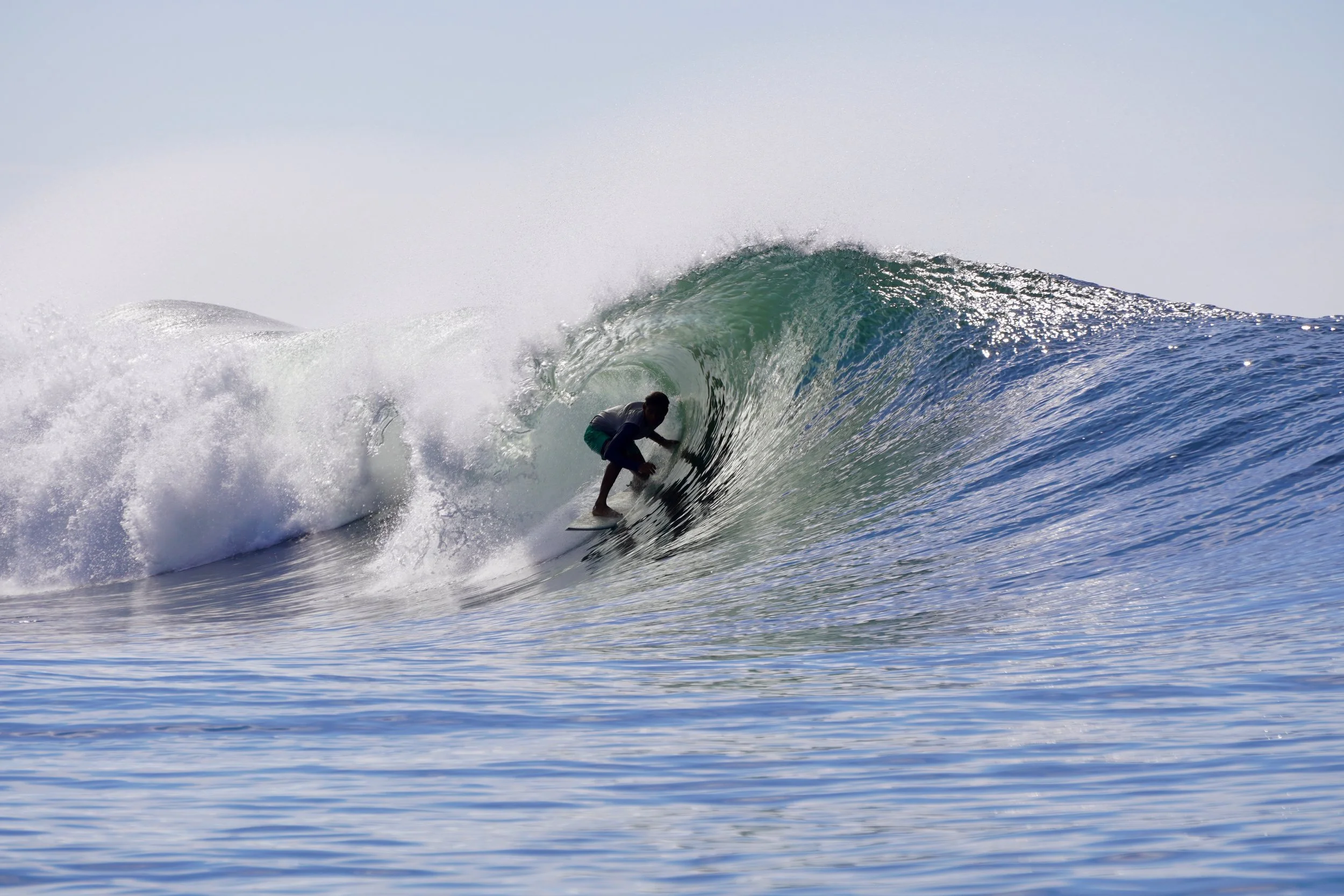
You're probably here if:
You're flowing gracefully between a wide variety of maneuvers.
Your surfing is confirmed by peers, photos, and video — the surfing talks.
You're comfortable across a wide array of styles and conditions.
You know exactly what you're working on and why.
You understand your limits — and chose them deliberately, not out of fear.
You're probably not here if you have no peers who can vouch for your surfing and no footage to show. Some experts hate cameras — that's fine — but someone should be able to say "she rips." It's also worth being honest that expertise outside the kinship structure is rare. Learning to surf as an adult and reaching genuine expert level happens, but it's the exception, not the rule.
What to Do With This
Wherever you landed, the next move is the same: be honest about it and act accordingly. The surfers who progress fastest aren't the most talented. They're the ones who know exactly where they are and make decisions from that place — what conditions to surf, what board to ride, whether to hire help, and when to push their comfort zone versus when to pull back.
Download the full PDF assessment for the complete self-scoring checklist and resource guide by level.
If you want to go deeper — what path makes sense for your level, what a coaching relationship actually looks like, or how to plan a trip that matches where you are — the Surf Journey Assessment is a 45-minute call designed exactly for that. And if you haven't read The Four Paths Into Surfing, start there — it's the foundation everything else builds on.