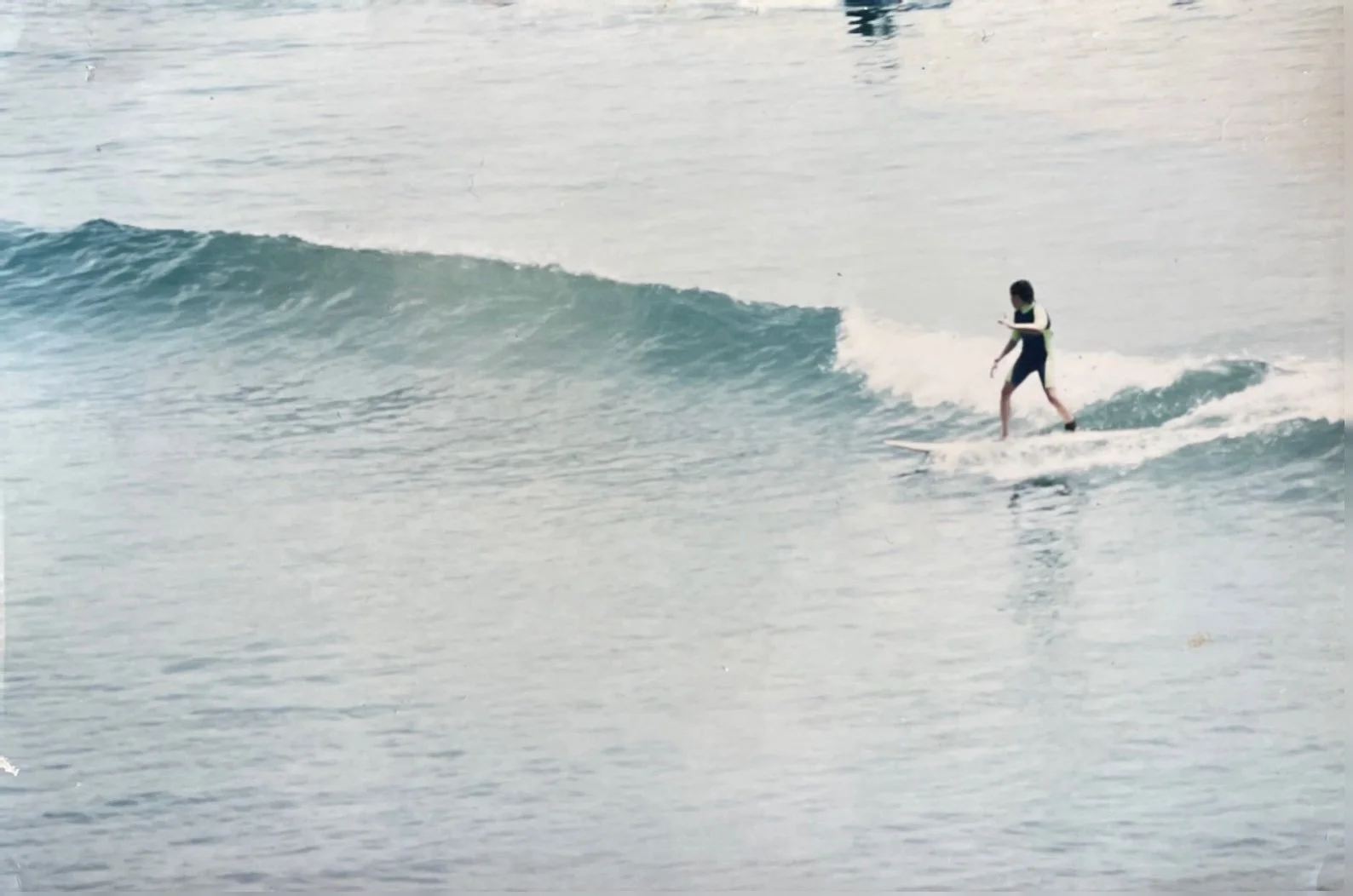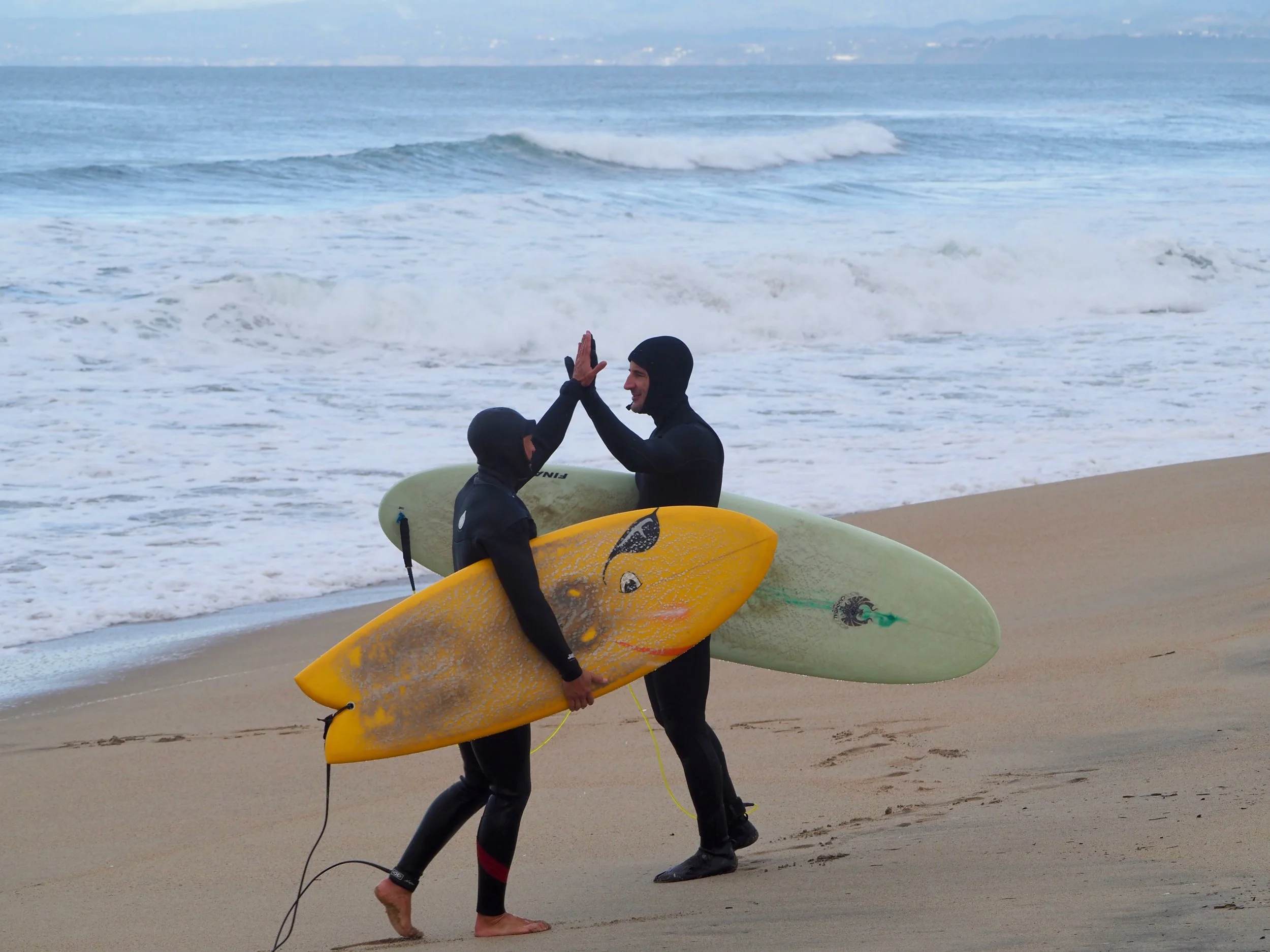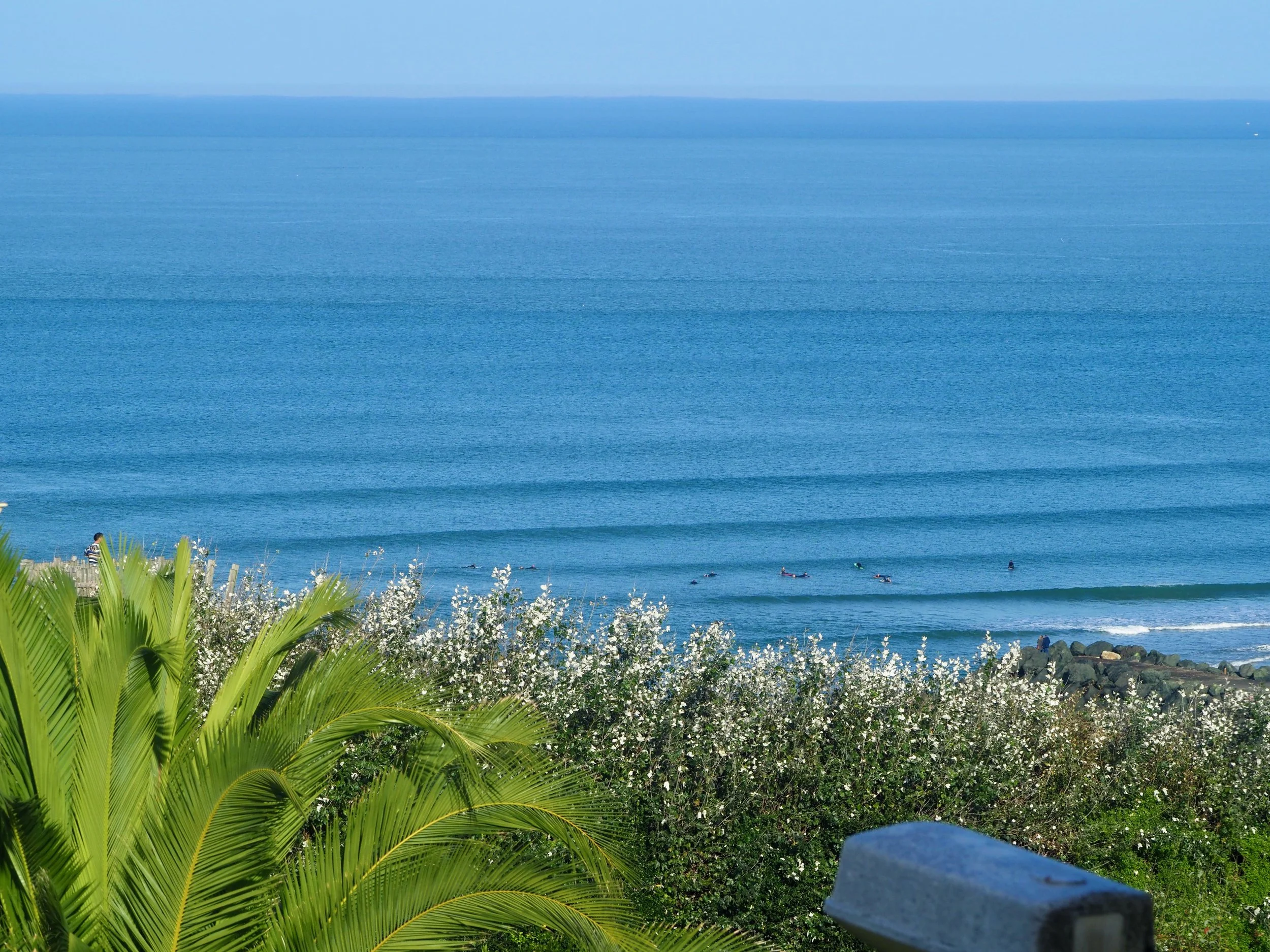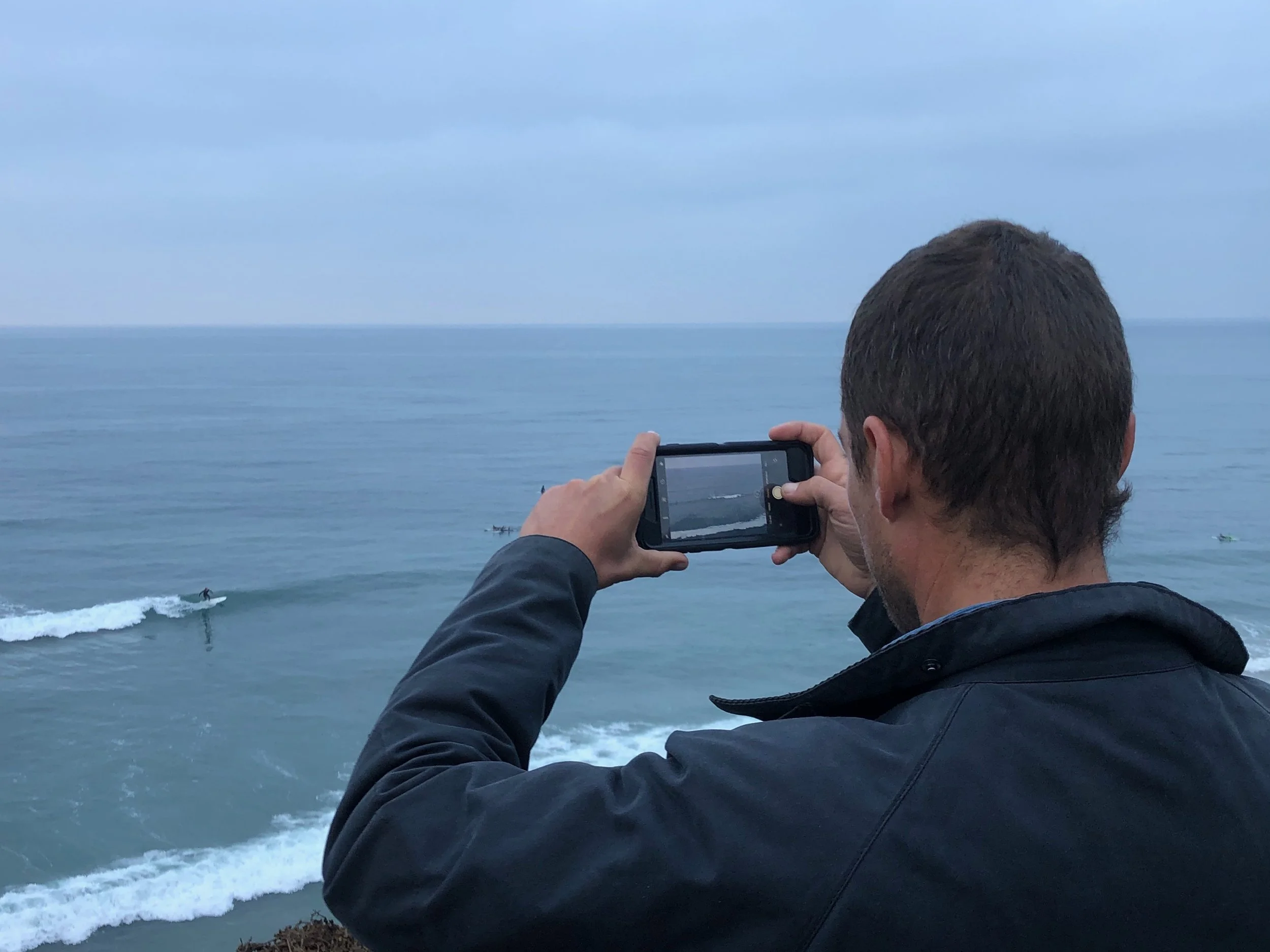
The Four Paths Into Surfing (And Why the One You Choose Matters)

THE FOUR PATHS KINSHIP COACHING SELF-TAUGHT SURF SCHOOL CONATUSSURFCLUB.COM

There are four paths into surfing: the kinship structure, teaching yourself, taking surf school lessons, or working with a coach. Each path is based upon different existing conditions and therefore leads to different learning outcomes. The kinship structure produces the world’s best surfers, but you have to be born into it or introduced to it at a very young age. The self-taught route is the romantic image of learning to surf, and it produces wildly variable results. Surf schools are available to all ages and are cheaper than coaching. They deliver a taste of surfing but not deep learning, and can often equip you with the wrong ideas about what it means to learn to surf. Coaching is accessible to anyone who budgets for life long education. Think of it like any advanced degree or mentorship skill. It builds correct intentions, judgments, and technique from day one. The path you choose at the beginning shapes how fast you progress, what habits you develop, and whether you stick with surfing long-term.

Beyond the kinship structure, in which by happy accident you’ve been blessed to, for example, grow up in front of Pipeline, people don't realize they have choices when it comes to learning to surf. They just do whatever seems obvious—rent a board and paddle out, or book a lesson. These aren't just different entry points. They're fundamentally different approaches to learning.

What is the Kinship Structure? 

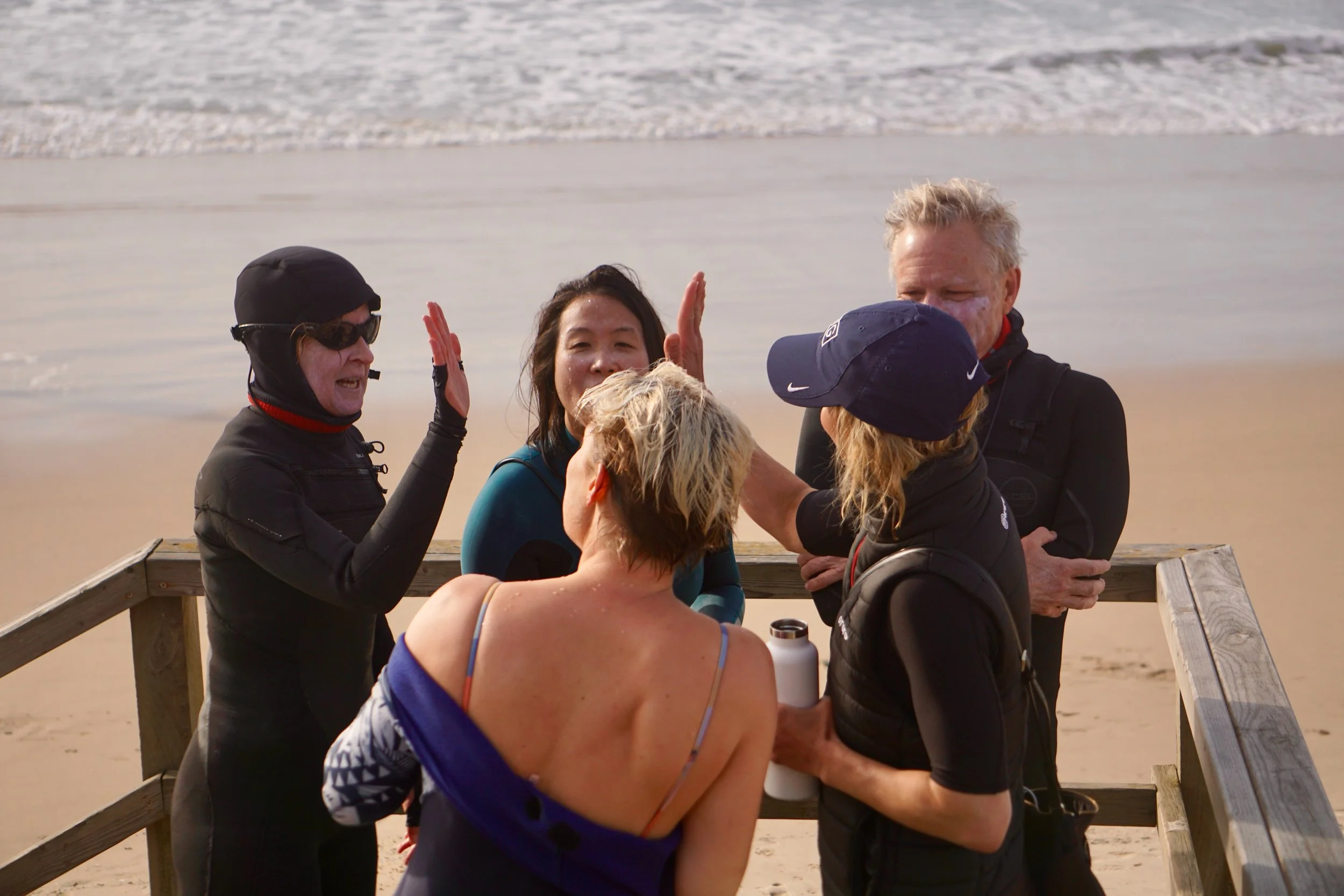
The kinship structure is how most of the world's best surfers learned—not through lessons or schools, but through proximity to a surfing tribe. It's not something you choose. Some kids whose parents surf never take to it. Others enter the water young because they live near the beach or know someone who brings them in. What matters is early immersion in a community where surfing is already happening. In that milieu, all beginners are kooks who need to find waves away from others and figure things out until they're good enough to start taking turns. The sheer awkwardness of learning automatically puts the learner at the bottom of the totem pole. And for that reason, the tribe has an incentive to make sure its younger members learn more quickly.

This isn't a formal teaching arrangement. People are just surfing. The elders enforce norms on the younger ones—where to sit, when to go, what not to do. No one is pushing anyone into waves or running through pop-up drills on the sand. The learning happens through observation, imitation, correction, and time in the water. The younger members see that they'll gain the ability to share better waves when they become more adept, so they set out to make themselves good enough to enter the real lineup. Everyone benefits when beginners progress faster. Even the roughest local doesn't want a child to get hurt at his break—and he doesn't want to busy himself with rescues when he could be getting tubed.

Almost everyone who teaches surfing actually learned this way. The irony is that what they offer in surf schools looks nothing like how they came up. Coaching is the path that most closely resembles the kinship structure—not because it replicates the tribe, but because it prioritizes the same things: ocean knowledge first, paddling second, standing as the result of everything else falling into place. It treats learning as a long-term relationship rather than a single transaction. That's what the tribe provides naturally. For those who didn't grow up in one, coaching is the closest approximation.

What Is the Self-Taught Path to Surfing?

Do not mistake the self-taught path from the kinship structure path. It’s a common error. Kelly Slater is not self taught. Carissa Moore is not self taught. I am not self taught. No virtuous surfer ever was self-taught. Every great surfer has mentors. 

But the romantic image of the self-taught surfer is real, and many people do believe that you just grab a board and go surfing. You’ll figure out how to learn to surf through trial and error, with no formal instruction. It's the most romanticized approach in surf culture—celebrated as the "authentic" way to learn—but produces the most variable outcomes. Some self-taught surfers figure it out; many develop bad habits they don't know they have and plateau far below their potential.

The story surf culture tells: real surfers didn't take lessons. They grabbed a board, paddled out, got worked, and figured it out through persistence. Nobody held their hand. They earned it. This is the idea of bootstrapping – that you just put on your boots and figure it out. Numerous educational theories have disproved this as an effective method for doing most anything well or virtuously. To hold the belief that self reliance is our highest goal, you make an arch category error: you assume that self reliance is the highest value, the most laudable goal and aim of a human life. That is a claim that requires in one of its premises a justification of what other people mean to us and how they affect our systems of value. It’s an extraordinarily cynical stance. It avows the presence of others, but questions anyone who would rely on them for his own continued well being. The fact of the matter is that one cannot avoid relying on others. To do so is a fool’s errand. To accept that we’re all here to toil with and for others is to see more clearly.

Looked at in this way, there really is no such thing as a self-taught surfer. If you rent a board or buy one based on something like my beginners guide to your first surfboard and just go surfing, you’re going to learn from other people. What and how you learn it will not be controlled. 
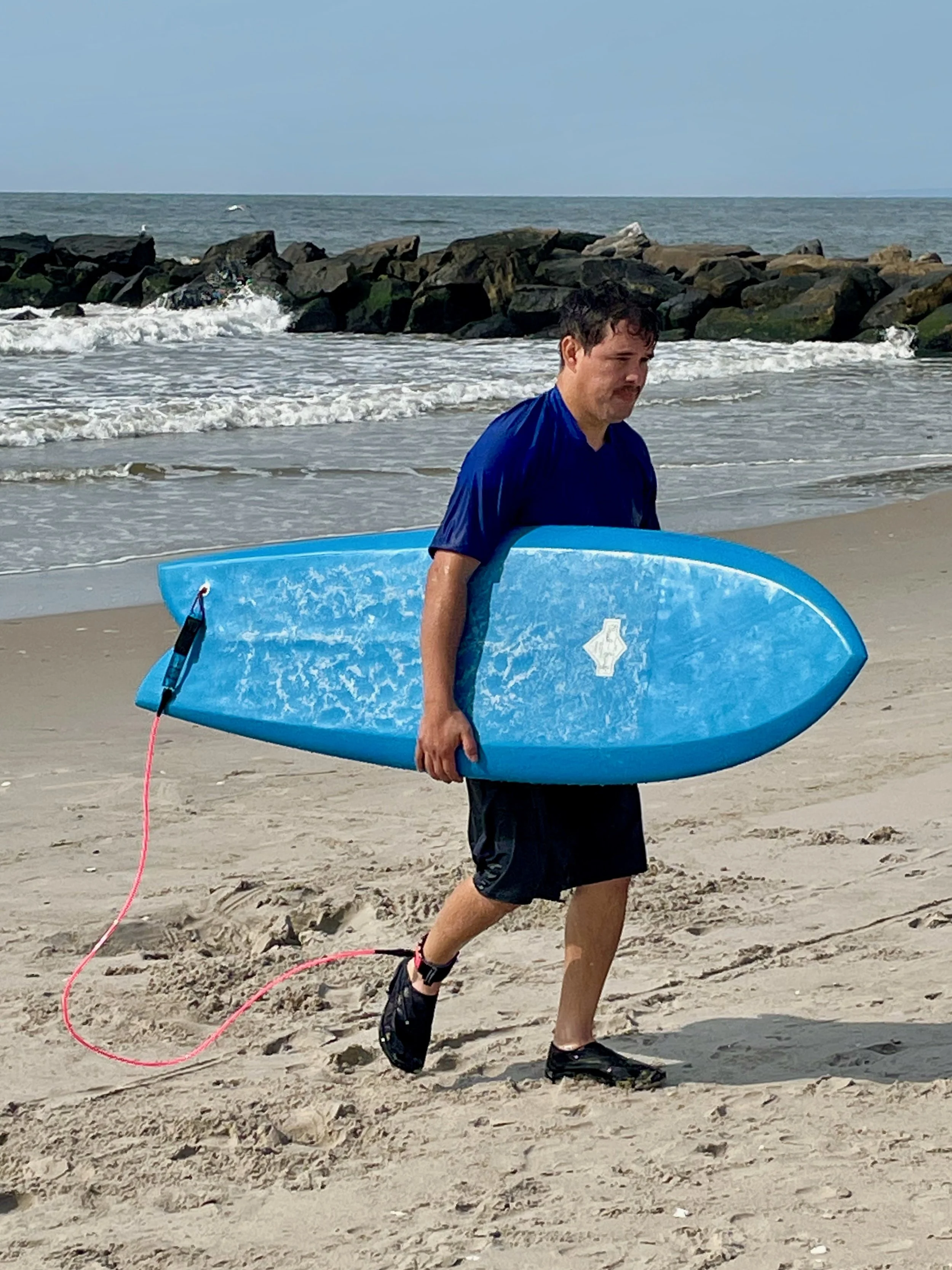
The problem the “self-taught surfer” is really trying to solve is how to learn something hard that others already know much more about and spend as little money on educating himself as possible. This approach is at once miserly and hubristic. Hubris is pride mixed with a willed ignorance. Everyone learns more effectively when they avow the reality of their vulnerability and asks for help. 

A word of warning: when learning to surf there is no escaping payment of one form or another. Everyone pays to play. EVERYONE. Yes, it’s true that people pay different amounts of different sorts of currency. And the education delivered looks different in each case. But in the end you will pay with some sort of grift – a piece of your life, time, energy, emotions, and resources. 

What Do Surf Schools Actually Teach?

Surf schools teach beginners to stand on a surfboard, typically in a single session. The standard model involves beach pop-up drills, then an instructor pushing you into whitewaters while you attempt to stand. This approach is optimized for short-term satisfaction—standing once and going home happy—rather than long-term skill development. Many schools also teach technique shortcuts that create habits surfers spend years unlearning.
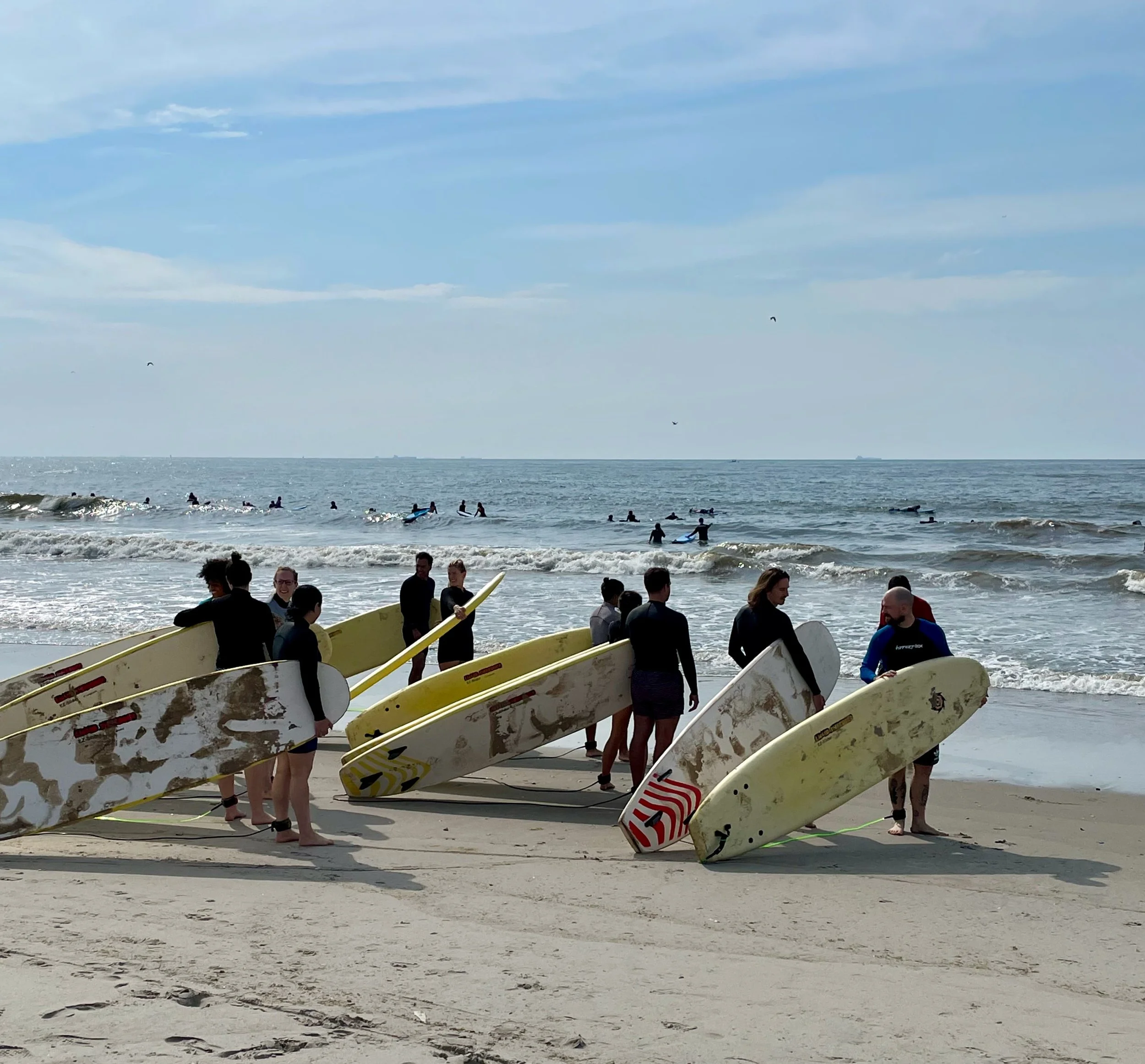
Surf schools aren't bad. They're great for kids—I've seen excellent programs in France that provide community and structure for children of non-surfing parents. Some adults thrive in group settings too.

But the business model is clear: stand once, go home happy, leave a five-star review. That's what the experience is optimized for.

The shortcuts are the bigger problem. Two-stage pop-ups, back-foot-forward methods, cobra push-up positions—these techniques get beginners standing faster but create habits that must be unlearned to progress. No expert surfer stands up this way.

What Does a Surf Coach Do Differently?

A surf coach teaches the foundational skills that actually make someone a surfer: paddling technique, wave judgment, timing, positioning, and ocean knowledge. Unlike surf schools, coaches prioritize these fundamentals over standing up quickly. You can start with a coach from day one—no prior lessons needed—and build correct habits from the beginning rather than developing shortcuts you'll later unlearn.

The difference is the approach. A coach understands that surfing isn't fundamentally about standing on a board. Standing is the icing. The cake is everything that happens before and during the stand.

With a coach, you learn to paddle before you pop up. You learn to read waves before you catch them. When you finally stand, it's because you've created the conditions for it—not because someone pushed you.

This takes longer at first. You may not stand on day one, or you may. But when you do stand, you'll know why it worked. And you won't have to unlearn a catalog of bad habits to reach the next level.

The money-saving way to learn is to not develop bad habits in the first place.

Which Path Produces the Best Results?

The kinship structure and coaching produce the most reliable results for surfers who want long-term progression. “Self-teaching” produces wildly variable outcomes with high risk of ingrained bad habits. Surf schools provide a taste of surfing suitable for one-time experiences but aren't optimized for skill development. The key insight: learning outcomes are controllable based on which path you choose.

Here's what each path produces:

Kinship structure: you were born lucky. Congratulations. 

Self-taught: Wildly variable. Some figure it out; many don't. Even the competent often have blind spots. Brutally inefficient learning curve.

Surf school: A taste. Good for kids, tourists, one-time experiences. Not optimized for progression. Often teaches shortcuts that create bad habits.

Coaching: Slower initial gratification, faster long-term progression. Builds correct habits from the start. More reliable outcomes.

How to Choose the Right Path

Choose based on your goal: if you want a one-time experience, any path works. If you want surfing to become part of your life, coaching or strategic self-teaching with video feedback produces better outcomes than the standard surf school model. Be honest about what you want before booking anything.

If you just want a taste—to try surfing once and see what the fuss is about—any path works. Have fun.

But if you want surfing to become part of your life, the path you take at the beginning shapes everything that follows.

Over the next few posts, I'll go deeper on each path: why the self-taught myth is misleading, why surf instructors default to push-to-stand, and what a coach actually does differently. Then we'll get into the logistics of planning a surf trip that sets you up for real progression.

Start by being honest about what you want. The choice follows from there.
How to Deal with Aggressive Surfers

Every surfer eventually encounters someone who screams, threatens, or tries to intimidate others out of the water. These confrontations can rattle you for days—or worse, make you avoid surfing altogether. Here's how to handle aggressive surfers without escalating the situation or abandoning your session.

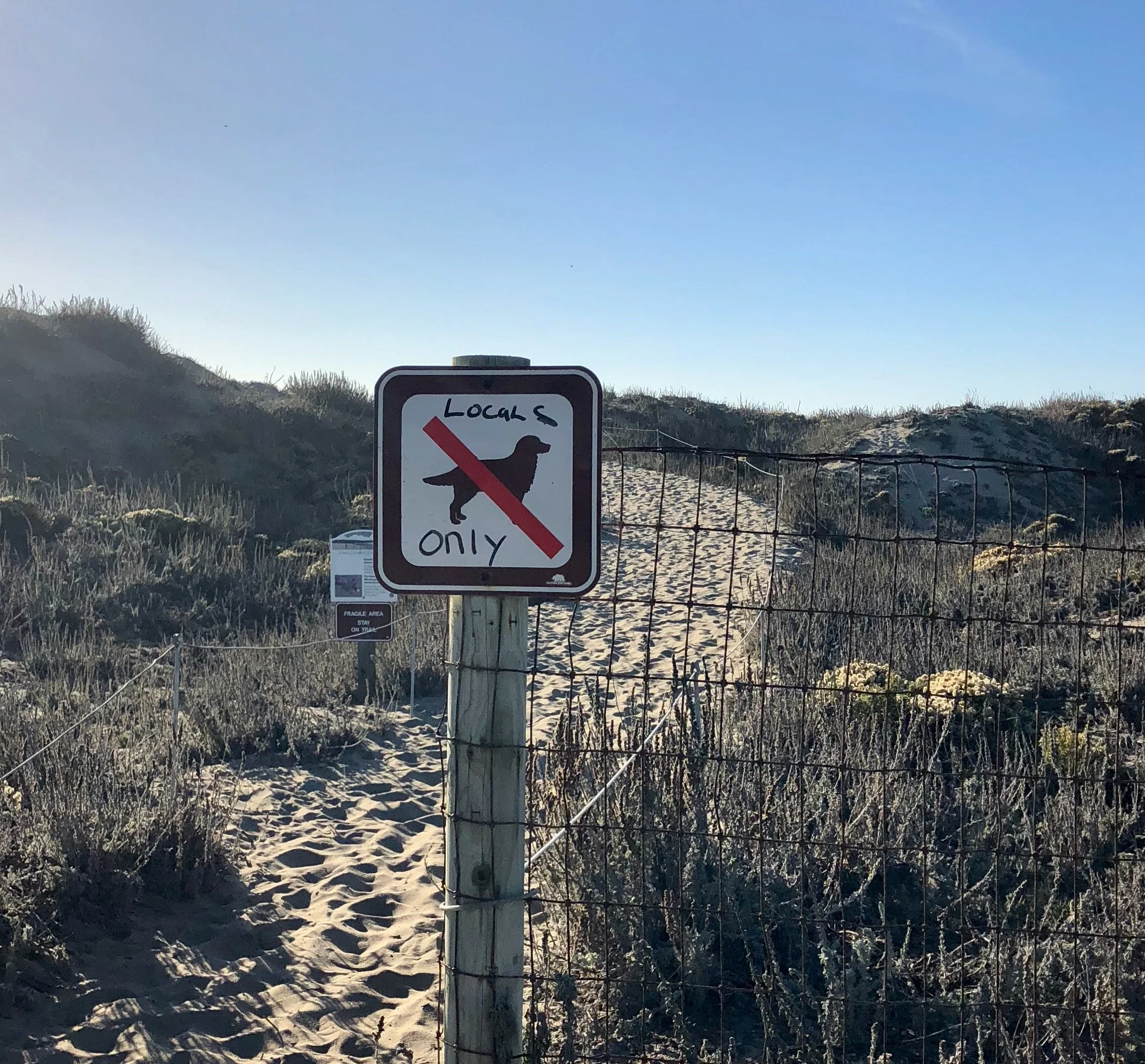
One of my students recently became the target of a notorious local who directs F-bombs at people in the lineup. My student wasn't doing anything wrong—she was simply surfing in "that person's" territory.

Graffiti like this can alert you to the fact that there will be surf bullies in the lineup.

I've been on the receiving end of similar treatment. Years ago, after watching one surfer repeatedly burn everyone in the lineup, I decided to burn her back. On the wave I took, she had already burned three other people. The irony that I was the one who deserved a drubbing wasn't lost on me.

I don't recommend my response. It didn't help. Fighting fire with fire rarely does in the water.

The Core Strategy: Hold Your Ground

Bullies work by bullying. If you're not bullied by the bully, half their job is gone. They try to scare you, and if you just hold firm and let it pass, you'll be okay. But if you let them intimidate you into leaving or changing your behavior, it confirms their approach works—and they'll keep doing it.

This doesn't mean confrontation. It means continuing to surf as you normally would, following proper etiquette, and not letting someone's aggression end your session prematurely.

Step-by-Step Response

Find your coalition. If someone you know is in the water, tell them what's happening. When my student told her friend what the aggressive surfer was doing, he said, "Oh yeah, she yells at everyone." Just knowing you're not alone—and that the behavior isn't about you specifically—helps.

Surf buds are more than just good vibes — they’re your social safety net in the lineup.

Check yourself honestly. Ask someone in your coalition if you genuinely did something wrong. Were you ditching your board in people's faces? Paddling around others without taking turns? If so, acknowledge it, course correct, and keep surfing. You're allowed to make etiquette mistakes—we all do. The difference is whether you learn from them.

Resolve to keep surfing. If you still have energy and desire to catch waves, don't let a bully end your session. Their anger is their problem, not your emergency.

Don't attack back. It's perfectly human to want to tell them to go fuck themselves. But it will be counterproductive. You can vent to your crew afterward. That's healthier.

When Someone Threatens or Assaults You

This is trickier. I have real-world experience here too. Filing complaints or making legal arguments rarely works in surfing and is usually more hassle than it's worth.

What works over time: continuing to surf as you normally do, in the places you normally surf. If you keep showing up, even the worst actors eventually give up. At some point, they'd rather just surf too.

If you're genuinely scared, double down on your coalition. Bring friends. Find allies in the lineup. Power in numbers. I keep a photo of one past assailant on a hard drive titled "In case I need to get a restraining order." Fortunately, just continuing to surf normally made it unnecessary.

Distinguishing Bullies from Bad Days

Not everyone who gets upset in the water is a bully. Sometimes people have legitimate grievances or are just having a bad day.

I get annoyed at people too. What irks me most: surfers who paddle for waves with their heads down, oblivious to others, especially right after missing a wave themselves. Recently I blocked someone doing exactly this. But when I explained—"It's okay, you can calm down, we're all sharing waves, just breathe and take turns"—I wasn't trying to intimidate. I was trying to communicate.

The test: use "I" statements. "Hey, I'm feeling like I pissed you off. Is that the case?" A reasonable person might explain what happened. "Well, you paddled into my path three times." That starts a conversation. But if someone leads with F-bombs and won't engage, they're probably not receptive—and they're most likely a bully.

The Long Game

Aggressive surfers aren't going away. They exist at every break, in every surf culture. The goal isn't to eliminate them—it's to not let them steal your joy.

Inevitably, more people will enjoy surfing with you than won't. It's because of the reasonable majority that you can weather the unreasonable few. Build your coalition. Follow proper etiquette. Keep showing up. The ocean belongs to everyone willing to respect it.

How many calories does surfing actually burn?

Google "calories burned surfing" and you'll find wildly different numbers: 200 per hour, 400 per hour, sometimes 600 or more. After four years of tracking with a Whoop and various other trackers, comparing data against my actual weight and food intake, I finally have numbers I trust.

The Short Answer

For a 145-pound surfer with above-average fitness, here's what different types of surfing actually burn:

Intensity Cal/Hour What It Looks Like
Low ~325 Lots of sitting, lower wave count, easy paddle, mellow longboard sessions
Moderate ~450 Decent wave count, some exertion, midlength in fun conditions
High ~650 High wave count, hard paddle, challenging conditions, shortboarding in pumping surf

A hard shortboard session in pumping conditions burns approximately 600 calories per hour. A mellow longboard cruise? Closer to 300. The type of surfing matters enormously.

how i know these numbers are accurate

Four years of heart rate tracker data (Garmin, Fitbit, Whoop), daily weigh-ins, and meticulous food tracking. The key was learning to read the data intelligently—identifying outlier sessions and understanding what the tracker measures well versus where it struggles.

The proof: during a 10-day surf trip to Barbados, my Whoop showed I averaged 2,678 calories burned per day. I was eating 2,700-3,500 calories daily and maintained my weight at 142 pounds the entire trip. The numbers matched reality.

Fitness trackers work on heart rate, and surfing is fundamentally cardiovascular. Once you accumulate enough data and learn to spot the outliers, the patterns become reliable.

calculate your weekly surf burn

Weekly surf hours reference:
Beginner: 2–3 hrs • Weekend warrior: 4–6 hrs • Regular: 6–10 hrs • Dedicated: 10+ hrs
hrs × 325 = 0 cal
hrs × 450 = 0 cal
hrs × 650 = 0 cal
Weekly Surf Calories: 0 cal
Daily Average: 0 cal/day

*Based on a 145 lb surfer. Larger bodies burn more, smaller bodies burn less. These are estimates—real accuracy comes from tracking over time or working with a coach.

What Affects Your Calorie Burn

Body weight. Larger bodies burn more calories doing the same activity. A 180-pound surfer will burn more than a 145-pound surfer in identical conditions.

Session intensity. This is the biggest variable. A mellow longboard session in waist-high waves burns far less than a shortboard session in overhead surf with strong current. Be honest about what kind of surfing you're actually doing.

Water temperature. Counterintuitively, warm water sessions burn more. In cold water, your heart rate down-regulates to keep you alive—your body goes into conservation mode. You're still burning calories in that 5mm, just not as many as you might think for all that work. Warm water? Everything runs hotter, you're more active, and the calorie burn reflects it.

Wave count and active time. A two-hour session where you catch 15 waves burns more than a two-hour session where you catch 5. Time spent actively paddling and riding matters more than clock time.

Currents. Strong currents mean more paddling to maintain position—significantly more calorie burn than a session where you're sitting in a calm channel.

Calculate Your surf-specific TDEE

Your Total Daily Energy Expenditure (TDEE) is your Basal Metabolic Rate (BMR)—what your body burns at rest—plus your daily activity burn from surfing. Plug in the daily average from the calculator above.

Non-binary or trans? Choose based on your current dominant hormone profile.

From the surf burn calculator (weekly ÷ 7)

Your BMR:
Daily Surf Calories:
Your TDEE:

A Reality Check on These Numbers

These calculators give you estimates—starting points, not gospel. The BMR formulas are based on population averages, and your actual metabolism could be significantly different.

And body weight alone tells you almost nothing. 180 lbs at 40% body fat and 180 lbs at 15% body fat are completely different bodies. 180 lbs on a 6-foot frame versus a 5-foot frame is a completely different weight distribution. The scale is a crude tool.

The only way to know your real numbers is to do what I did: track food intake and weight consistently over weeks and months, identify the patterns, and let the data tell you the truth. Or work with a coach who can help you dial it in faster. The calculators get you in the ballpark. Consistent tracking—or expert guidance—gets you the actual answer.

Beyond the Numbers

Once you know your calorie target, the application is simple: eat a little less to lose weight, eat a little more to gain weight. Whether your goal is to cut, bulk, or maintain, adding mobility and resistance exercises helps keep your muscles intact and healthy through the process.

And while CICO is king at the end of the day, not all calories are created equal. A diet built predominantly from whole food sources—especially plant sources high in fiber—is proven time and again to support healthy gut function. The healthier your gut functions, the better you surf. Energy levels, recovery, inflammation, mental clarity—it all connects back to what you're actually eating, not just how much.


Want to dial in your surf-specific nutrition? My SR365 program includes personalized TDEE calculations, meal plans built on whole food principles, and the mobility and HIIT routines that'll actually improve your surfing. Set up a call and let’s get you in the best surf shape of your life!

Why Most Surf Content Doesn't Help You Surf Better

You've watched the YouTube tutorials. You've scrolled through the Instagram reels. You've read the listicles—"5 Tips to Improve Your Pop-Up." And yet, when you paddle out, not much has changed.

That's not your fault. Most surf content is designed to get clicks, not to get you waves.

The typical advice floats on the surface: bend your knees, look where you want to go, commit. It's not wrong, exactly. It's just incomplete. It tells you what without explaining why. It skips the underlying mechanics—the positioning that earns you priority, the forecasting knowledge that puts you in the right place at the right time, the fitness that makes your body capable of what your mind already understands.

Surfing is too complex to be reduced to tips. It's a system. Your paddling affects your positioning. Your positioning affects your wave selection. Your wave selection affects your confidence. Your confidence affects your commitment. Everything connects.

That's why I built Dr. Dion's Surf Secrets.

Every Friday, I send one publication to subscribers. Not a tip. Not a hack. A piece of the system—technique breakdowns that explain the why, surf-specific workouts, lineup strategy, forecasting decoded, etiquette that earns respect in the water. The kind of knowledge that compounds over time.

This isn't content designed to perform well on social media. It's designed to make you perform well in the water.

What you get for $25/month—the best value in virtual surf coaching:

  • Weekly technique, strategy, and mindset breakdowns

  • Surf-specific workouts and mobility routines

  • Plant-based recipes for session fuel

  • Gear reviews without the sponsored hype

  • Forecasting tips so you stop missing swells

  • First access to trips and coaching spots

  • Direct line to a coach with a PhD who actually surfs

I've coached surfers at every level, from first-timers to competitors. The ones who progress fastest aren't the most athletic. They're the most curious. They want to understand what's actually happening—not just be told what to do.

If that sounds like you, Surf Secrets is the entry point.

Knowledge changes everything. Subscribe to Dr. Dion's Surf Secrets and start surfing like you understand what you're doing.

Why Most Surf Schools Teach You to Learn Backwards

Most surf schools start with pop-up drills on the beach. This feels logical—you need to stand up, so practice standing up. But after 22 years of teaching, I can tell you this approach actually decelerates your learning. The reversal sounds counterintuitive until you understand how surfing was taught successfully for generations before surf schools existed.

The Natural Learning Order

I grew up surfing a heavy beach break in Central California. Before I ever focused on standing up, I learned to observe waves—where they break, how they break, what the patterns are. I learned to paddle with proper form. The pop-up came last, almost as an afterthought, because by then I understood where to be and how to get there.

This is what I call the kinship structure—how kids learn to surf when they grow up around it. Ocean knowledge first, paddling second, standing up third. It's far more effective than any surf school method because it builds skills in the order they actually matter.

Why Reversing the Order Creates Problems

When you start with pop-up drills, you draw attention inward—toward your body, your feet, your arm placement. Meanwhile, the wave is doing something beneath you that you're completely unaware of. This is why so many surf school graduates struggle with looking down the line. They've been trained to look at themselves, not at the ocean.

The three most common beginner mistakes I see—not being patient with the ocean, poor paddling form, and not looking at the wave through the entry—aren't separate issues. They're symptoms of a learning process that's been reversed from its natural order.

How to Apply This

Learn some basic oceanography. A little surf forecasting goes a long way. You can get my Free Forecasting Cheat Sheet right now. That will get you started.

Spend more time watching before paddling out. Even five minutes observing—where waves break, where people catch them, what the rhythm is—beats rushing into the water blind.

Film your paddling. Most people have no idea what they look like. The "corpse paddle"—lower body dragging like dead weight—is epidemic. Fix this and everything else gets easier. Want me to critique your paddling? Consider a Mini Surf Audit.

Train yourself to look down the line, not at your feet. Your body follows your eyes. Staring at your feet means surfing toward the beach. Looking down the line means surfing along the wave.

If you're stuck, stop thinking about the pop-up entirely. Spend your next several sessions focused purely on reading waves and perfecting your paddle. Let the standing happen as a byproduct of better positioning. You may be surprised how quickly things click.

The Takeaway

Surf schools reverse the natural order because "learn to stand up today!" is easier to sell than "learn to patiently observe the ocean." But if you want to actually progress—if you want to feel confident in the lineup instead of perpetually confused—you need to learn in the order that creates competent surfers, not the order that's easiest to market.

Ocean knowledge. Paddling. Then the pop-up. Everything else follows. If you need help, I’m here. Book a consult and let’s go.